Written by Marc Hafner Productivity & Time Management
SMART goals
Core Idea
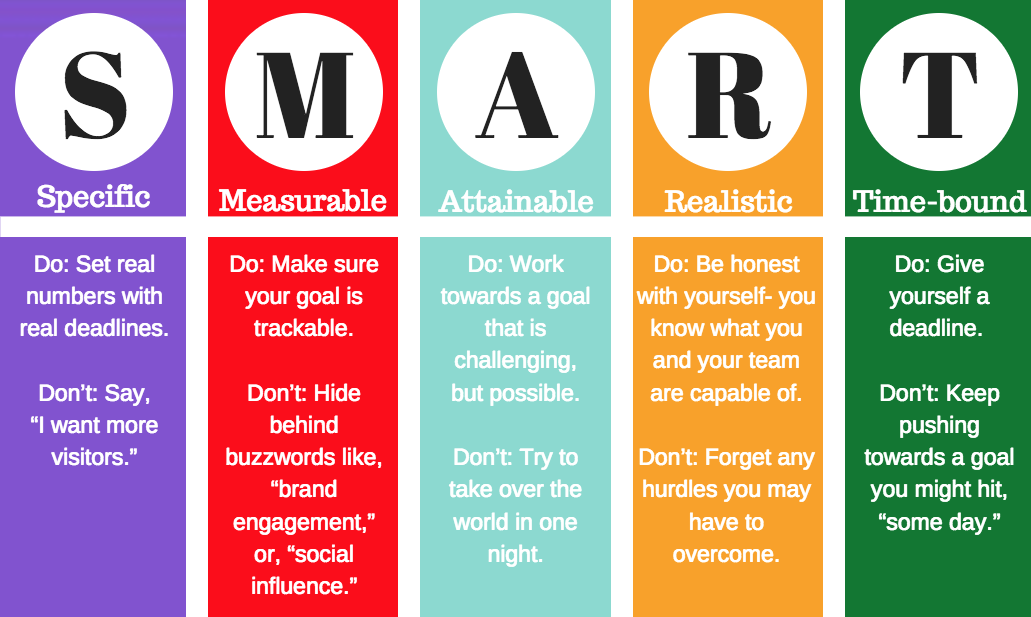
SMART goals translate vague academic intentions into concrete, actionable commitments by making objectives Specific, Measurable, Attainable, Realistic, and Time-bound.
Why It Matters
PhD projects are inherently open-ended. Without clearly defined goals, your work can easily drift, priorities become blurred, and it becomes difficult for you to assess whether you are actually making progress. SMART goals give you structure in an environment with few external deadlines.
How to Apply
- Replace outcome-free goals with concrete deliverables.
- Define measurable indicators.
- Set deadlines that are realistic but restrictive.
- Align short-term SMART goals with long-term PhD milestones (papers, thesis chapters, grants).
Common Pitfalls
- Defining goals that are technically SMART but academically irrelevant.
- Over-planning and excessive goal fragmentation.
The Eisenhower Matrix
Core Idea
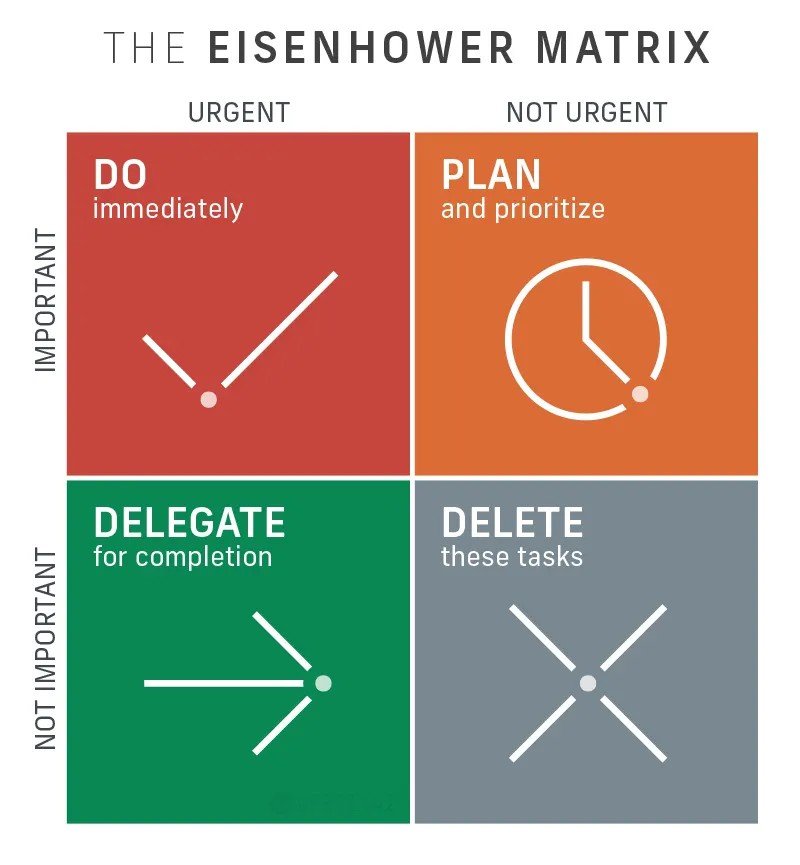
The Eisenhower Matrix is a prioritization framework that classifies tasks by importance and urgency, enabling PhD students to focus on work that advances their research rather than reacting to immediate demands.
Why It Matters
PhD work is dominated by long-term, high-importance tasks with weak or entirely absent deadlines. Without deliberate prioritization, urgent but low-impact activities (such as emails, administrative tasks, or minor revisions) can easily crowd out the substantive research work that actually moves your PhD forward.
How to Apply
- Classify tasks into four categories:
- Important & Urgent: Address immediately.
- Important & Not Urgent: Schedule and protect time for these (core PhD work).
- Not Important & Urgent: Minimize, delegate, or batch.
- Not Important & Not Urgent: Eliminate.
- Actively reserve uninterrupted time blocks for “Important & Not Urgent” tasks such as writing, thinking, and designing experiments.
Common Pitfalls
- Equating urgency with importance.
- Classifying core research tasks as “not urgent” and repeatedly postponing them.
The Pareto Principle (80/20 Rule)
Core Idea
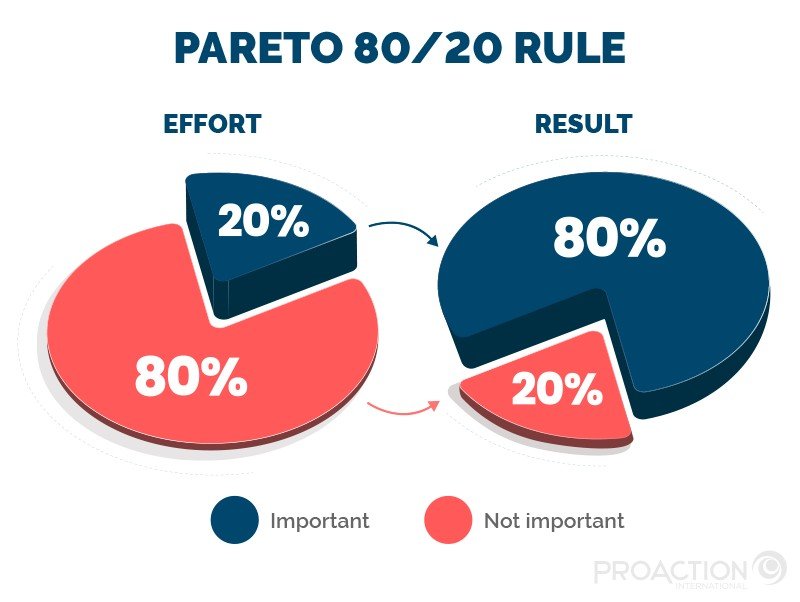
The Pareto Principle states that a small proportion of efforts typically generates the majority of meaningful outcomes.
Why It Matters
Your doctoral research offers an almost unlimited number of things you could do, while your time and cognitive resources remain strictly limited. Without clear prioritization, your effort is easily spread thin across low-impact activities. Applying the Pareto Principle helps you focus on the small set of tasks that materially advance your publications and your dissertation.
How to Apply
- Identify the activities that most directly contribute to core outputs (papers, thesis chapters, key results).
- Prioritize tasks that create reusable value, such as figures, conceptual frameworks, or methods sections.
- Reduce or batch tasks with low marginal impact, even if they feel productive.
Common Pitfalls
- Treating the 80/20 ratio as a precise measurement rather than a heuristic.
- Using the principle to justify neglecting necessary but unglamorous work.
Eat That Frog!
Core Idea
“Eat That Frog” is a productivity principle that recommends tackling the most difficult or most important task first, thereby reducing procrastination and freeing cognitive capacity for the rest of the day.
Why It Matters
PhD work often involves tasks that are cognitively demanding, such as writing or critical thinking. These tasks are easy to postpone and tend to generate persistent mental load when delayed. Completing them early in the day increases your focus, builds momentum, and strengthens your sense of progress.
How to Apply
- Identify the single task that would make the day successful if completed.
- Schedule this task for the first focused work block of the day, before meetings or email.
- Work on it without multitasking until a clear stopping point or deliverable is reached.
Common Pitfalls
- Choosing a task that is merely unpleasant rather than genuinely important.
- Attempting to “eat a frog that is too large” instead of defining a concrete, achievable subtask.

Parkinson's Paradox
Core Idea
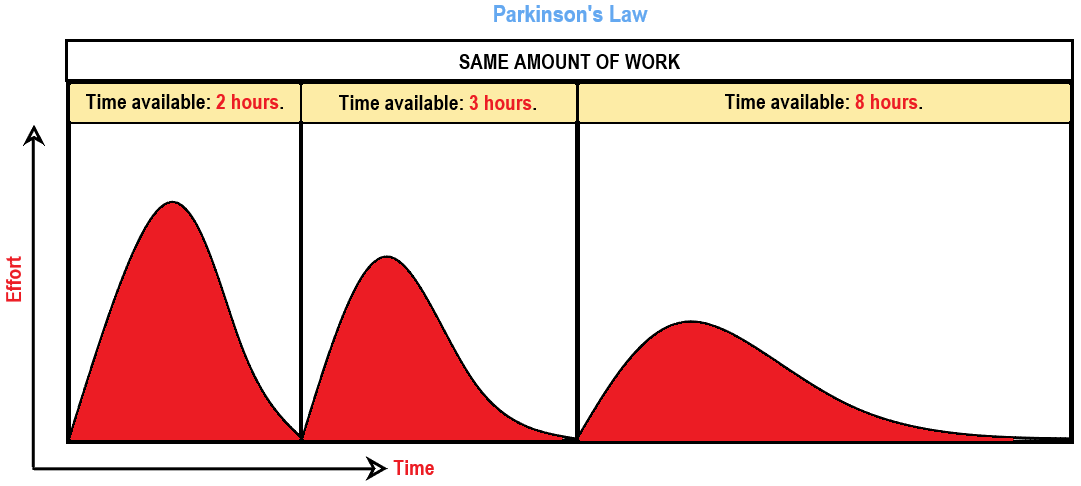
Parkinson’s Law states that work expands to fill the time available for its completion. In PhD work, overly generous timelines often lead to inefficiency rather than higher quality.
Why It Matters
Your doctoral research typically comes with few fixed external deadlines. As a result, your work can easily stretch indefinitely without producing clear progress. Parkinson’s Law helps you understand why long time frames often reduce focus and urgenc, even when you are highly motivated.
How to Apply
- Set deliberately shorter, artificial deadlines for tasks.
- Break large tasks into time-boxed units with explicit deliverables.
- Use fixed working sessions (e.g., 90-minute blocks) with a defined endpoint.
- Commit to stopping when the time limit is reached, even if the task feels incomplete.
Common Pitfalls
- Setting deadlines that are unrealistically short and lead to superficial work.
- Using Parkinson’s Law as an excuse to rush tasks that genuinely require extended reflection.
Speed Reading
Core Idea
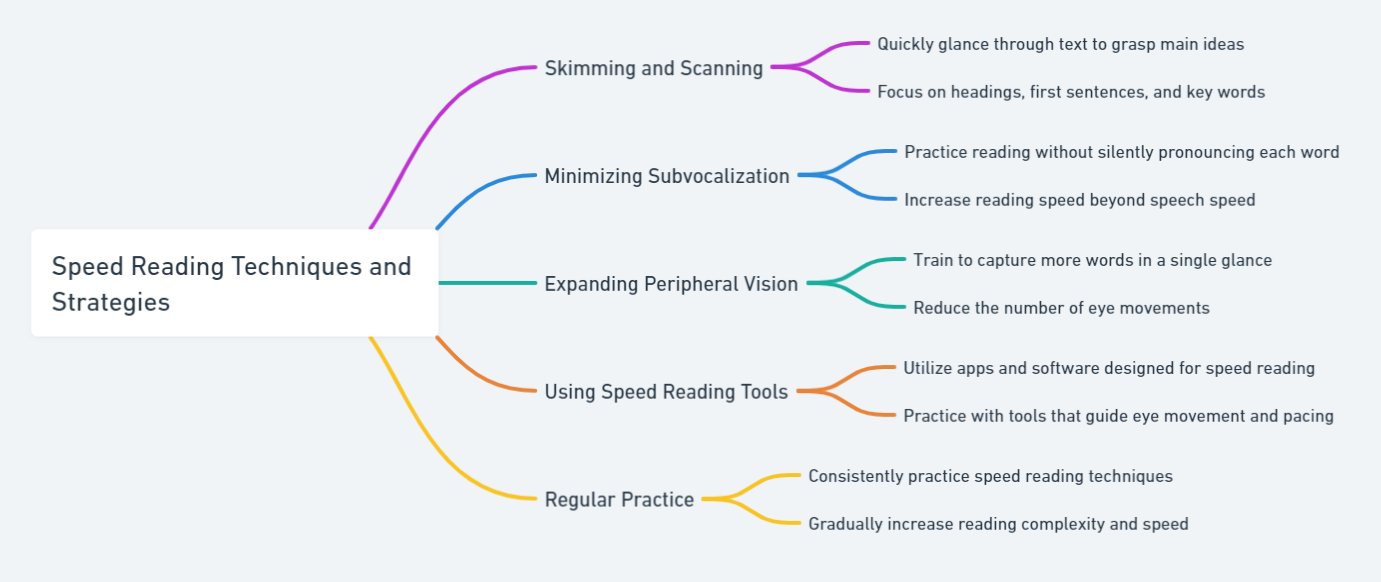
Speed reading is a set of techniques aimed at increasing reading efficiency by reducing subvocalization and focusing attention on extracting relevant information rather than reading every word.
Why It Matters
As a PhD student you must process large volumes of literature under time constraints. Reading every paper line by line is neither feasible nor necessary. When applied selectively, speed reading helps you orient yourself more quickly in the literature and prioritize which sections of which paper deserve deeper, more careful reading.
How to Apply
- Use speed reading primarily for screening and scanning, not for complex argumentation or methods.
- Switch to slow, analytical reading only for sections that are directly relevant.
- There are many specific techniques for speed reading you can find online.
Common Pitfalls
- Skipping note-taking or synthesis, leading to shallow knowledge retention.
Cornell Notes
Core Idea
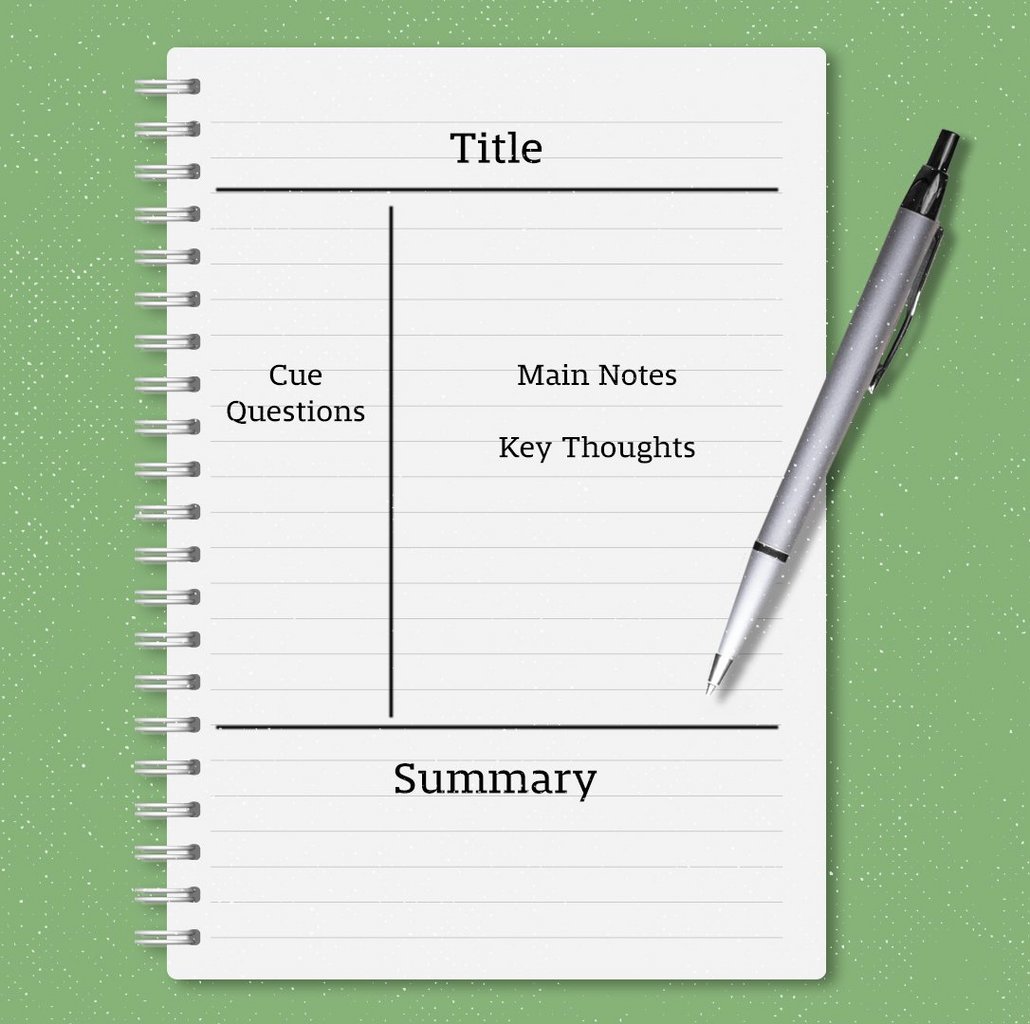
The Cornell Notes method is a structured note-taking system that separates information capture, key questions, and synthesis, supporting deeper understanding and long-term retention.
Why It Matters
PhD students often accumulate extensive notes that are rarely revisited or integrated. When notes remain unstructured, they hinder synthesis and make it difficult for you to connect ideas across papers or projects. The Cornell Notes method imposes a minimal structure that supports active reading and makes your notes far more useful later on.
How to Apply
- Divide each page or document into three sections: main notes, cue/questions, and summary.
- Capture core arguments, methods, and results in the main notes section.
- Formulate questions, keywords, or critique points in the cue column.
- Write a short synthesis after finishing the paper or session, focusing on relevance for your research.
Common Pitfalls
- Overloading notes with quotations instead of paraphrased insights.
- Skipping the summary step, which provides most of the cognitive benefit.
Lessons Learned for PhDs
Marc Hafner
Ph.D. student in Secure Mobile Networking