Written by Marc Hafner Academic Writing
How to Read a Paper
Core Idea
Reading a scientific paper is a selective, question-driven process, not a linear one. The goal is to quickly assess relevance and extract insight, not to read every word.
Why It Matters
PhD students are confronted with far more papers than they can read in full. Reading papers sequentially and in detail is inefficient and often unnecessary. Without a structured reading strategy, you risk losing time on irrelevant work and missing the core contributions that actually matter for your research.
How to Apply
- Start with Title and Abstract to assess relevance.
- Read the Conclusion next to understand the main contribution and limitations.
- Only if the paper is relevant, continue with Introduction and Motivation to understand context.
- Identify the Problem being addressed and why it matters.
- Examine the Method and How it works only to the depth required for your purpose.
Common Pitfalls
- Reading papers linearly from start to finish by default.
- Spending excessive time on methods before understanding the contribution.
- Failing to stop reading once sufficient information has been extracted.

How to Plan and Write a Paper
Core Idea
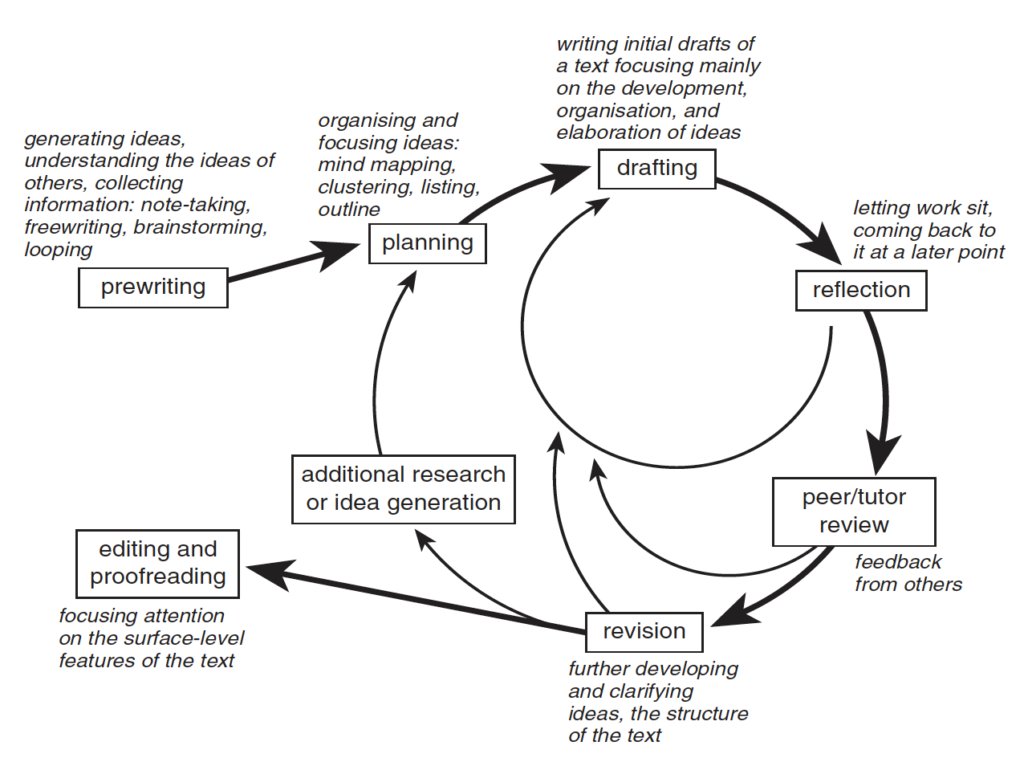
Writing a scientific paper is an iterative process, not a linear one. Planning, drafting, feedback, and revision continuously inform each other and should be treated as interconnected stages.
Why It Matters
Many PhD students delay writing until ideas feel “finished,” which often leads to stalled progress and overthinking. When you understand writing as a process rather than a final step, you reduce pressure, invite earlier feedback, and turn incomplete ideas into publishable contributions much more efficiently.
How to Apply
- Start with prewriting: collect ideas, notes, references, and rough arguments without worrying about structure or quality.
- Move to planning: clarify the research question, contribution, and narrative through outlines or concept maps.
- Produce drafts early, focusing on content and structure rather than wording.
- Alternate between reflection, feedback, and revision to refine arguments and organization.
- Reserve editing and proofreading for the final stages, after conceptual issues are resolved.
Common Pitfalls
- Treating writing as a one-pass activity instead of a cycle.
- Editing language and style too early, before ideas are clear.
- Waiting for “complete understanding” before starting to draft.
- Skipping feedback until very late, when structural changes are costly.
Lessons Learned for PhDs
Marc Hafner
Ph.D. student in Secure Mobile Networking