RD 1: Charting Far From Equilibrium
MP 1: Atlas of Change
Life doesn’t stand still. Far-from-equilibrium systems, where change is the rule rather than the exception, are the engines of biochemical complexity and thrive on constant motion, adaptation, and evolution. Our goal is to uncover the key principles that govern these restless systems by systematically identifying the structures, pathways, and constraints that shape transient dynamics across scales.
At the heart of this effort is the Atlas of Change (MP 1), a navigation system that captures and organises transient processes into something we can chart, compare, and anticipate, turning "unpredictable" complexity into a navigable system. It will provide the timing and environmental triggers the Atom Printer (MP 2) needs to snap matter into place, and set the boundaries within which Rules of Life (MP 3) can be defined.
Pillar I: Stochastic dynamics
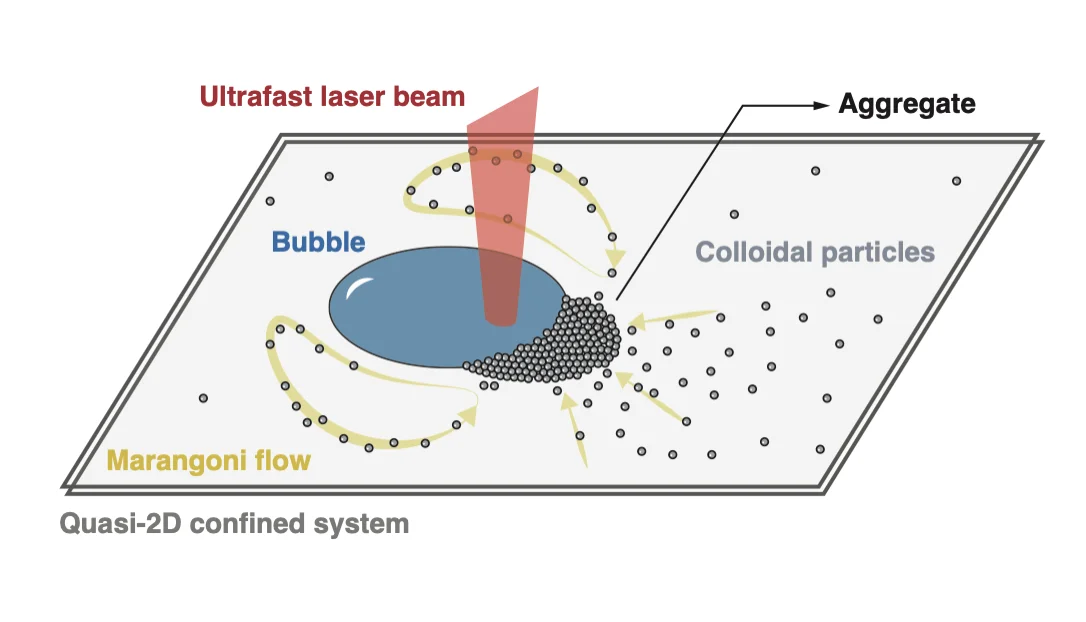
Our preferred model for investigating stochastic dynamics is an ultrafast laser-driven colloidal system we pioneered, called Driven Dissipative Colloids (DDC). By intentionally engineering the system to be devoid of specific (bio)chemical, magnetic, or optical interactions, we isolate and directly observe purely physical mechanisms. This approach allows us to study how physical effects give rise to rich complexity in both pattern formation and emergent behaviour.
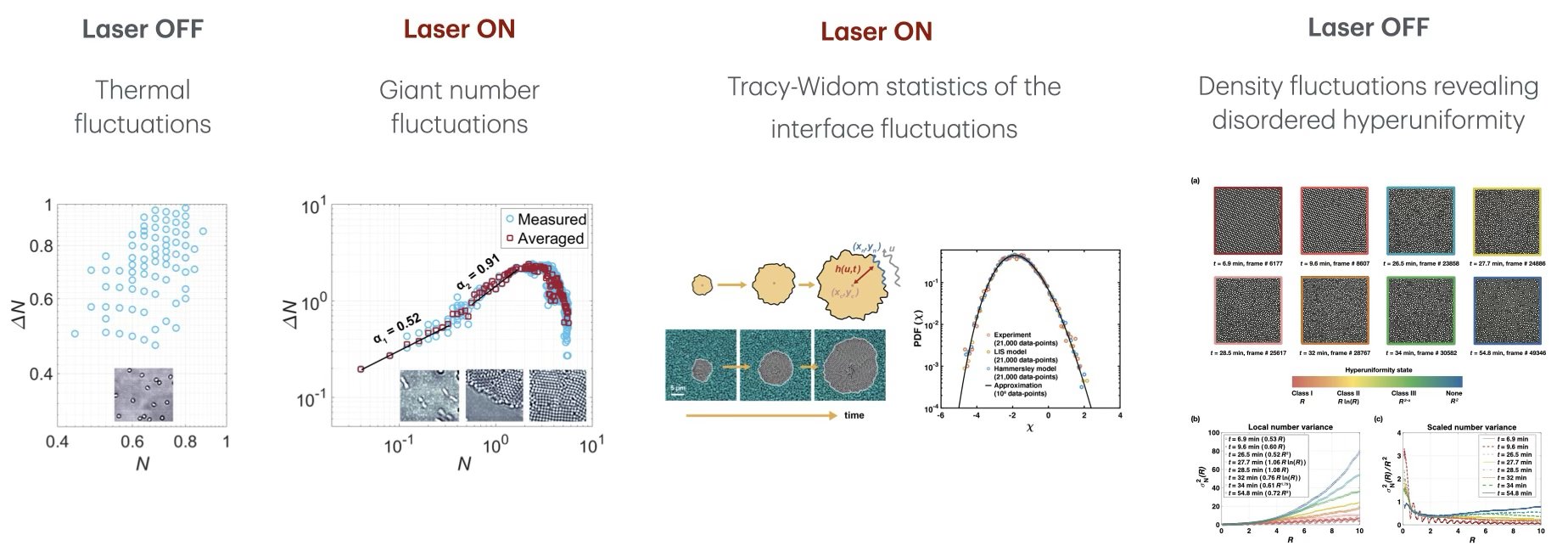
The first thing we did was to characterise fluctuations across three distinct phases: pre-driving, during external driving, and post-driving. Here is what the data revealed:
While the system exhibits standard thermal fluctuations at rest, excitation by laser pulses triggers Giant Number Fluctuations (GNFs) (Nat. Comm. 2017). This transition facilitates rapid structure formation, epitomising Nobel laureate Ilya Prigogine’s principle of “order through amplified fluctuations”. We subsequently elucidated that the statistics of interface fluctuations of the growing structure follow the Tracy-Widom (TW) distribution (Nat. Phys. 2020), a hallmark of universal growth processes.
The logical next step was to deactivate the laser and observe the fluctuations as the structure dissipated (the structures only exist while energy is being pumped in). Upon measuring the density fluctuations during this relaxation phase, we found them to be anomalously suppressed, a behaviour typical of highly ordered systems. This led to our discovery that, even as the visible structure fades, the system retains a “hidden order” characterised by disordered hyperuniformity, or superhomogeneity, for much longer (nearly an hour) than its natural timescales (microseconds) (JPCM, 2021).
Pillar II: Nonlinear dynamics
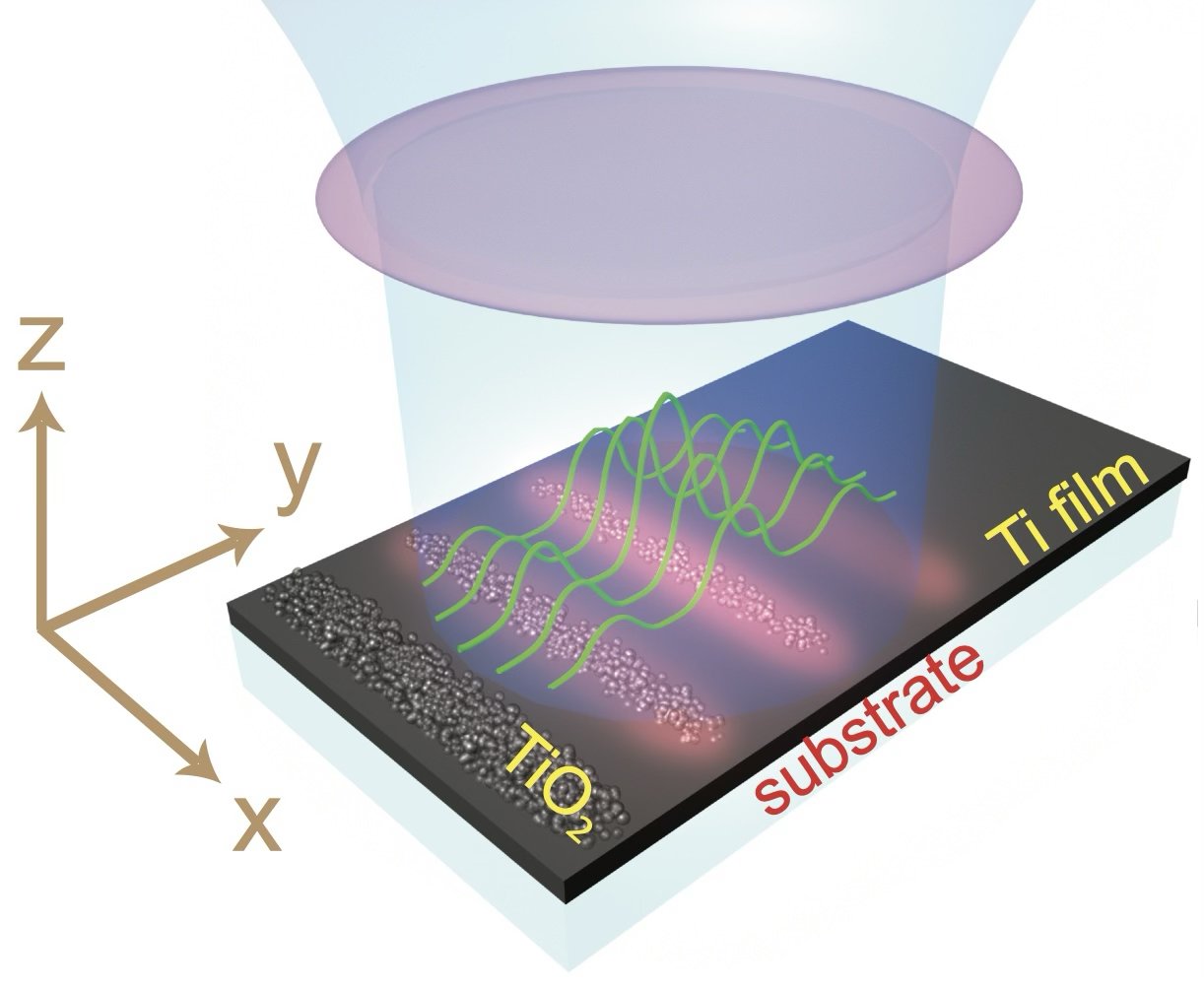
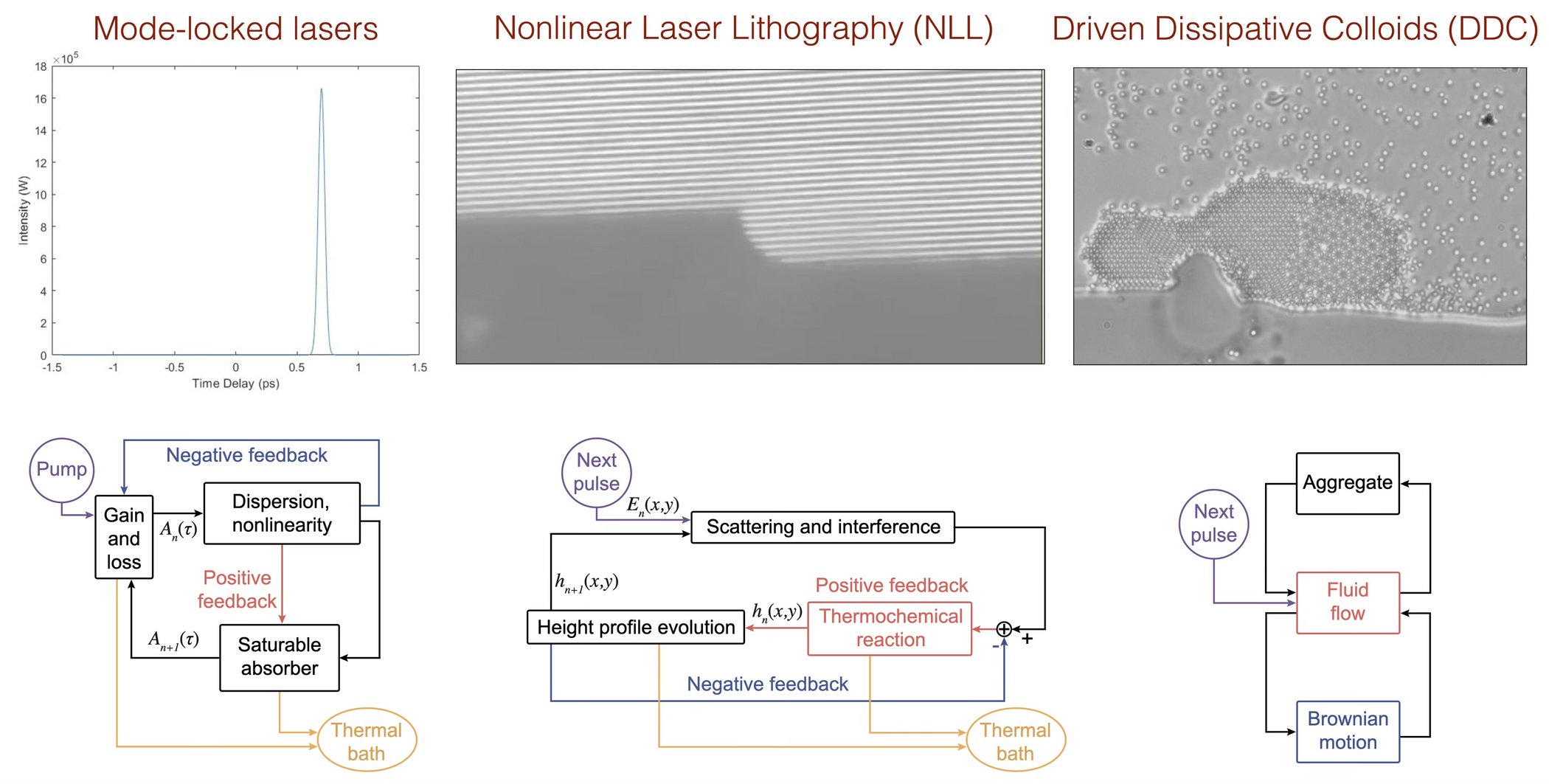
We investigate light-matter dynamics by contrasting stochastic systems (DDC) with deterministic systems (NLL, led by and in collaboration with the Chair of Nonlinearity Engineering: NLE), aiming to decouple the singular and synergistic effects of stochasticity and nonlinear dynamics.
In both regimes, the process begins with nonlinear energy absorption, triggering a cascade of light-matter interactions that further amplify the nonlinearities. By studying the emergence of structure, behaviour, and material properties, we have established several key milestones.
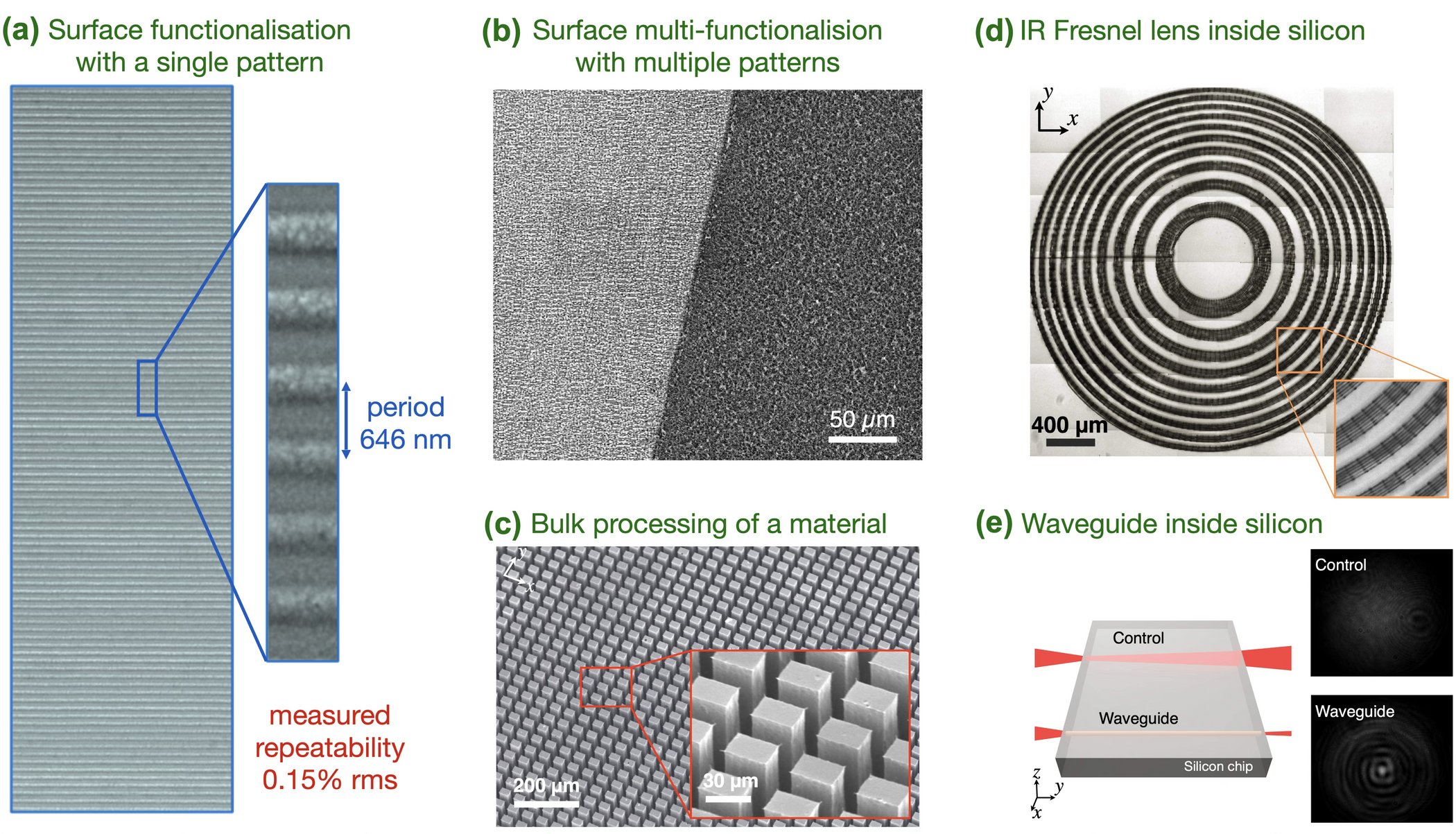
We demonstrated that nonlinear dynamics drive the formation of long-range, self-similar, and self-organised patterns with unprecedented uniformity (Nat. Photon 2013). This discovery enabled us to scale the process across diverse materials and interaction volumes, moving from surface structuring to high-precision “deep-bulk” writing without compromising material surfaces (Nat. Photon 2017).
Introducing strong stochasticity does more than facilitate dynamic transitions; it ushers in a distinct interaction regime in which perturbations actively shape pattern formation and collective behaviour, substantially amplifying the system’s complexity (Nat. Comm. 2017).
Pillar III: Intrinsic feedback mechanisms
One can envision the feedback mechanisms as the pivotal “third gear” that meshes stochastic and nonlinear dynamics, enabling this triple-mechanism to drive the engine of complexity. To quantify the operational principles of this cogwheel, we developed toy models based on two of our model experimental systems: DDC and NLL.
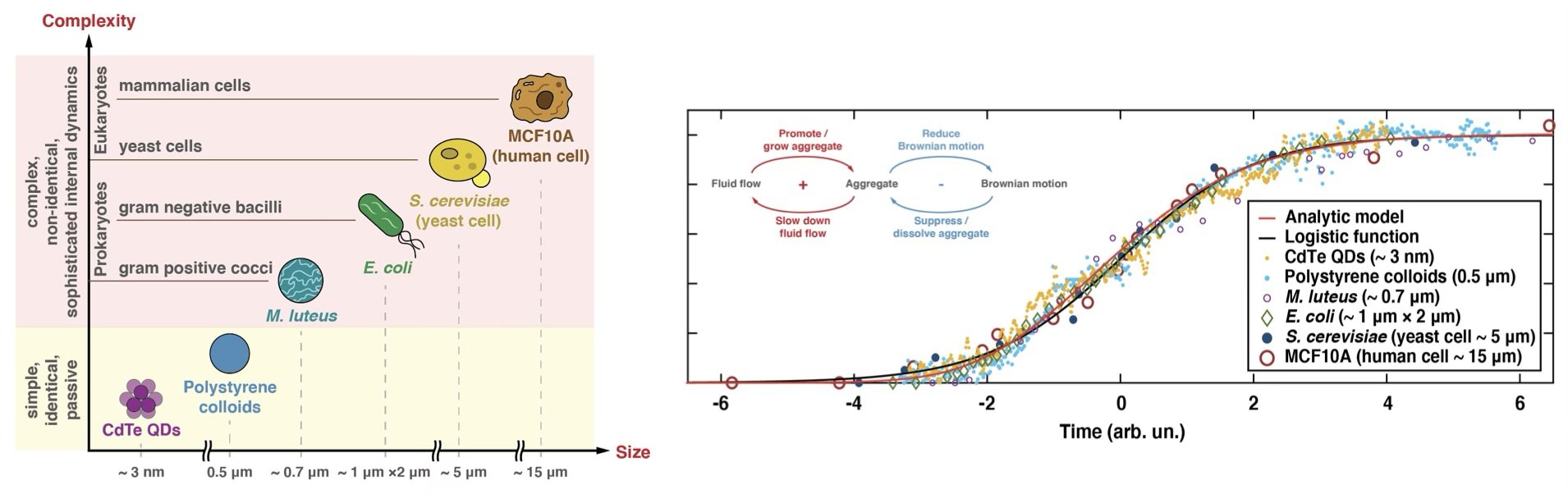
Combined with our computational findings, these systems reveal that positive and negative feedback mechanisms are internally coupled. This duality dictates the lifecycle of our two model systems. The former drives emergence and accelerates growth, the latter provides a counter-force to limit expansion. The balance between these forces determines the system’s fate, whether the emergent structure or behaviour is sustained through self-regulation, transitions into a new form, or eventually dissipates.
Using the DDC platform, we demonstrated that this feedback mechanism is universal (Nat. Phys. 2020) across a wide range of matter, from quantum dots to human cells, thereby achieving unprecedented spatiotemporal control.
Building on this via NLL, we discovered that systems often possess competing feedback mechanisms (arXiv, 2025). By strategically switching between these mechanisms, NLE and we have shown that pattern formation is not merely spontaneous but can be programmed.
These contributions have garnered significant interest from both the scientific community and media outlets, leading to featured journal covers and coverage in global news and academic forums.
Pillar I: Stochastic dynamics
We are expanding our research on Tracy-Widom statistics by developing a theoretical model that accounts for nonlocal correlations emerging from driven dissipative dynamics. This initiative is currently being investigated by Dr. Vahideh Sardari Kurand.
In parallel, we have recently initiated experimental studies to clarify the nonlocal contributions to the dynamical evolution of the disordered hyperuniform states observed in DDC (JPCM, 2021) as they relax toward thermal equilibrium. We are also developing a toy model to provide a framework for these observations. This initiative is currently being investigated by Dr. Serim Ilday.
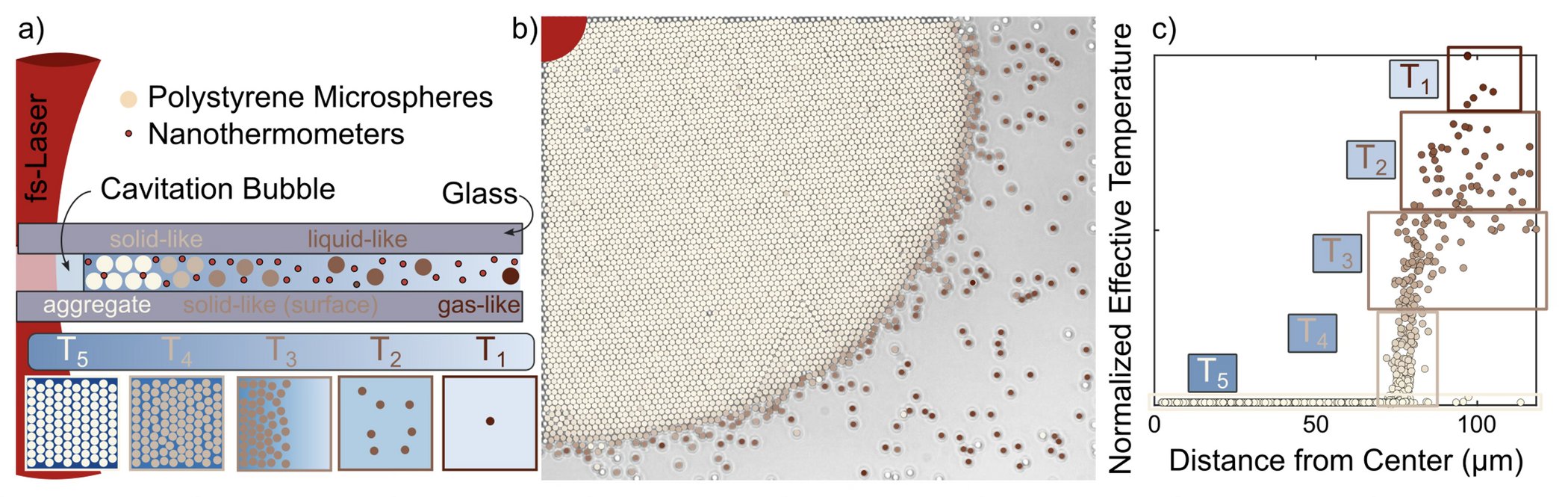
Because DDC operate far from equilibrium, the system lacks a uniform temperature. Accurate characterisation is essential yet notoriously challenging. While we have previously utilised mechanistic measurements (such as the mean-square displacement of particles) and fluid-dynamics calculations, each method presents specific trade-offs. To achieve a more comprehensive understanding, we have invested in optical nanothermometry (nanothermometers provided by Center for Applied Nanotechnology CAN) to help us map the spatiotemporal temperature profile. We built an experimental setup with which Dr. Simon Spelthann is currently conducting key measurements and analysis to compare and contrast with our previous findings.
Pillar II: Nonlinear dynamics
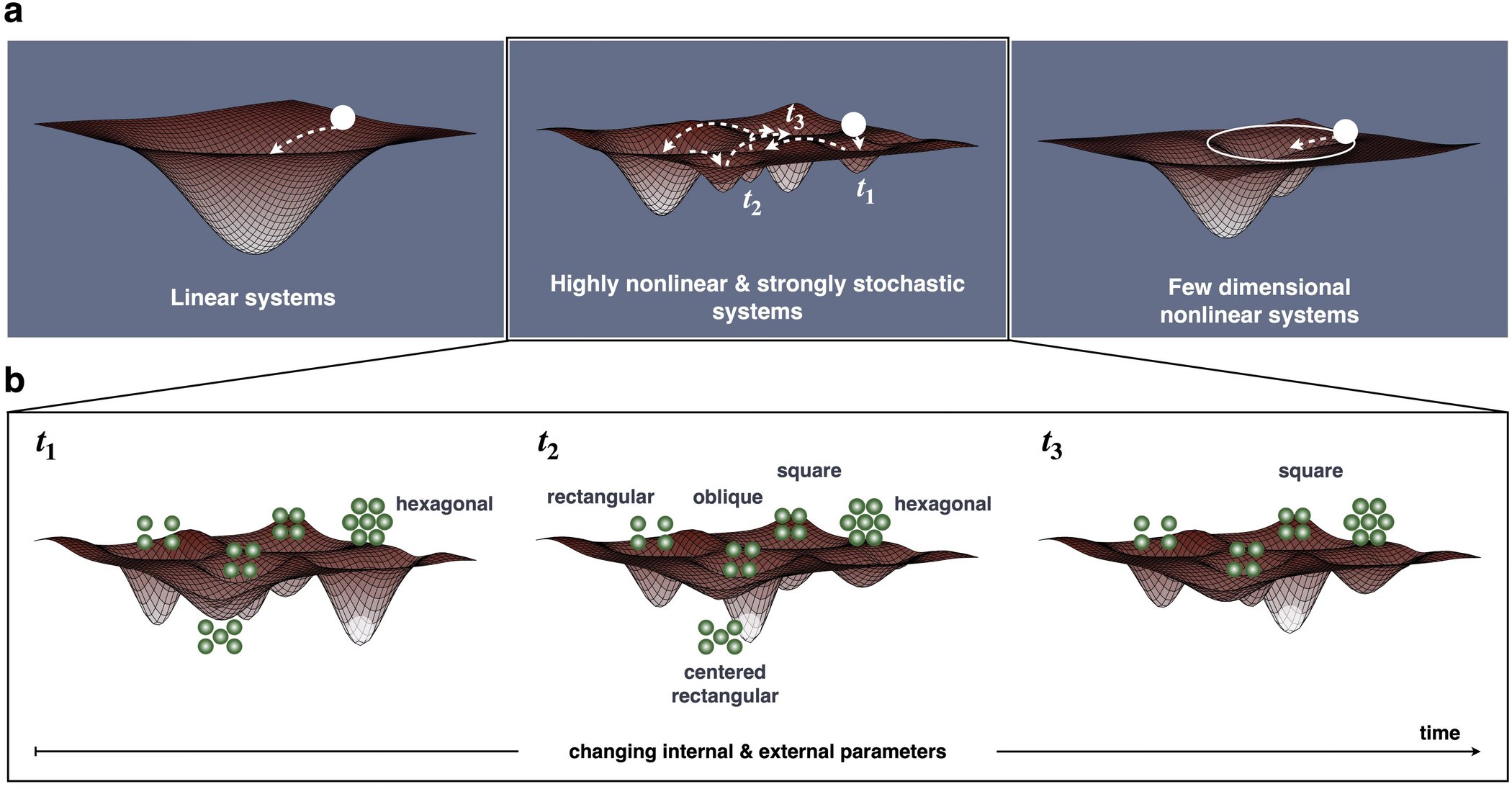
Nonlinearities expand a system’s phase space, facilitating the emergence of non-trivial patterns and complex behaviour. Stochasticity allows the system to navigate this landscape by enabling transitions between various steady states. Our research investigates these dynamics within DDC and NLL, as well as in a third model system, mode-locked lasers (led by and in collaboration with NLE), providing a comparative analysis of how stochastic and nonlinear dynamics, both independently and in combination, shape a system’s evolution.
We have developed a Langevin simulator for DDC, enabling a large-scale statistical exploration of the wide configurational space inherent to dynamic, adaptive colloidal patterns. We are currently preparing manuscripts to disseminate our findings. In parallel, we demonstrated high-precision control over NLL pattern formation dynamics and functionalised material surfaces, programming them to achieve specific surface properties (arXiv, 2025).
Recently, we focused on the robustness of driven dissipative systems, using mode-locked lasers and DDC as strongly stochastic and nonlinear model systems with large phase spaces. Mode-locked lasers are one-dimensional, with emergence strictly in the time domain. Whereas DDC is quasi-two-dimensional, with emergence investigated in the spatial domain. We are developing a general measure that can assess their robustness despite their differences. This topic is currently investigated by Orçun Okur from NLE.
Pillar III: Intrinsic feedback mechanisms
This pillar aims to advance the theoretical understanding of field coupling and nonlocality in DDC and NLL systems. Building on our previously introduced and evolving toy models, we investigate formal analogies between these systems and a broader class of theoretical frameworks to elucidate their full scope and implications. Work on the DDC side is investigated by Dr. Serim Ilday, while Dr. F. Ömer Ilday of NLE is working on the NLL side.