Research
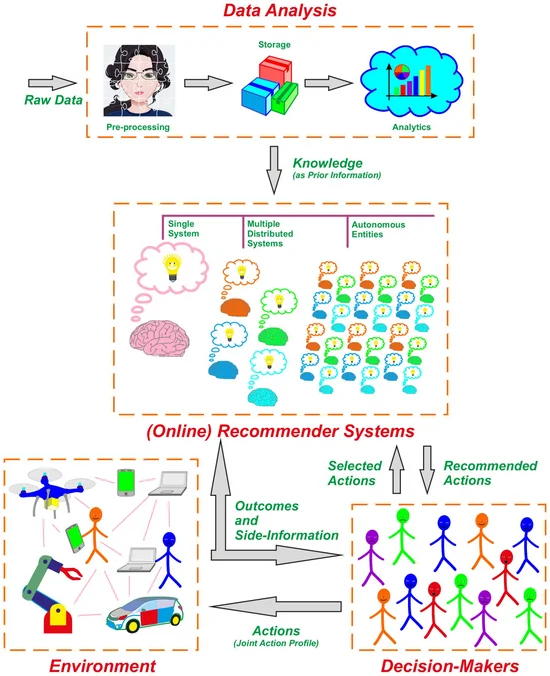
Example
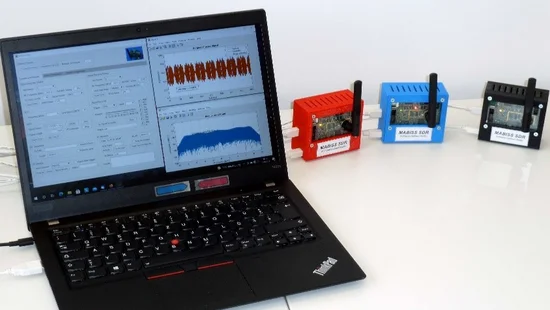
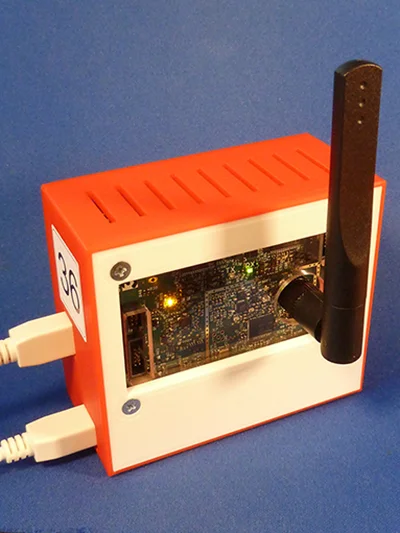
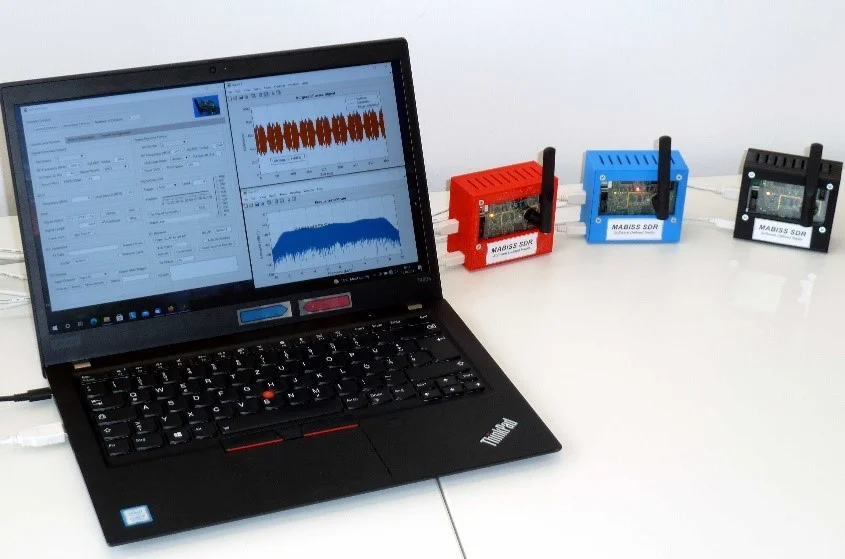
The research group ‘Intelligent Technical Systems’ has developed its software-defined networking platform in the past few years. The platform building blocks are software-defined radios (SDR), as appears in the figure. The devices are embedded systems that can operate independently of a host computer. They consist of three modules, i.e., radio elements (such as transmitter and receiver), processors (based on FPGA), and interfaces to a computer for application control and data exchange. The collection of these three modules makes SDR devices “intelligent” to some level: They collect data by sensing, learn by running machine learning programs, and make decisions using decision-making methods based on AI. Besides, they are connected as they can communicate via the radio propagation medium based on various protocols and standards. Therefore, the platform shown in the figure is a connected system of intelligent systems. In such a platform, implementing AI-based decision-making strategies enables communications between any pair of devices with no central control and information about crucial variables such as channel quality. That can even cover mobile terminals, i.e., when the SDR devices move around, or uncertain energy availability, for example, when the devices obtain their required power at least partially via renewable energy resources such as solar cells.
As an example, consider spectrum allocation. In a wireless communication network, spectrum is a precious resource and permanently in excess demand; as such, intelligent spectrum consumption plays an essential role in the efficiency of a wireless network. That becomes achievable by implementing our AI- and ML-based decision-making algorithms in the processors of SDR devices. Via such strategies, each device decides about its transmission channel in consecutive rounds. By observing the outcome of each decision at each round, i.e., the achieved data rate, the algorithm adapts the decision. The ultimate goal is to obtain an efficient equilibrium in which the devices use the spectrum to the best possible, and the entire system remains steady.