Information for...NewsContact
Fakultät für Elektrotechnik und Informationstechnik
  • Faculty
    DeaneryProfessorsCentral FacilitiesLibraryCIP-InselElectronic Workshop (EWS)Student CouncilIT Department ETITMechanical Workshop
    EventsGraduation CeremonyGirls' DayFaculty ColloquiumCareer Event CrossINGAlumni EventMaster Info EventWDR Türen auf mit der Maus
    Equal opportunitiesInclusionDecentralized Gender EqualityDecentralized Diversity
    AlumniPersonalitiesArchiveMarketingCommitteesApprenticeshipFeinwerkmechaniker (m/w/d)Mikrotechnologe (m/w/d)Information for companies
  • Professorships
    Electrical Engineering & Plasma TechnologyCommunication AcousticsAnalog Integrated CircuitsApplied Electrodynamics & Plasma TechnologyAutomationDigital Communication SystemsEmbedded SystemsElectronic CircuitsPower Systems Technology & Power MechatronicsMicrowave SystemsIntegrated High-Frequency Sensors
    Integrated SystemsCognitive SensorsLearning Technical SystemsMedical EngineeringMicrosystems TechnologyNonlinearity EngineeringPhotonics & Ultrafast Laser SciencePhotonics & Terahertz TechnologySimply Complex LabTheoretical Electrical EngineeringNetworked Energy-Efficient SystemsElectronic Materials & Nanoelectronics
  • Research
    Faculty ColloquiumFaculty Colloquia SoSe 2025Faculty Colloquia WiSe 2025/26Faculty Colloquia SoSe 2025Faculty Colloquia WiSe 2024/25Faculty Colloquia SoSe 2024Start-upsResearch funding
    DoctorateTopING PhD program
  • Studies
    Prospective StudentsInformations for School TeachersInformation for School StudentsBachelor ETITApplication and enrolmentPrep course and introduction daysCourse of StudyBachelor IT-EngineeringApplication and EnrollmentCourse of study
    Master ETITStudy specialisationsApplication and enrolmentMaster Lasers & Photonics (LAP)Course structureApplication and AdmissionExam regulations and documentsCareer prospectsContact & Support
    CoursesServices and Information for StudentsDual study program / practice-integrated study programStudying with research practiceStudy AbroadDouble Degree OutgoingsDouble-Degree IncomingsErasmus (Europe)UNICJapan - Nagoya UniversityUSA - Purdue UniversityIncomings
    Student Advising ServiceETIT Examination OfficeExamsExam regulations and documentsChange of examination regulationsFormsFinal thesesWithdrawalDeregistration
Ruhr-University Bochum
  • Faculty
    • Deanery
    • Professors
    • Central Facilities
      • Library
      • CIP-Insel
      • Electronic Workshop (EWS)
        • Equipment
        • Collections
        • Projects
      • Student Council
      • IT Department ETIT
      • Mechanical Workshop
        • Services
          • Standard items
        • Placing an order
        • Apprenticeship
    • == T R E N N E R ==
    • Events
      • Graduation Ceremony
        • Akademische Feier 2025
        • Akademische Feier 2024
        • Akademische Feier 2023
        • Akademische Feier 2022
        • Akademische Feier 2021
        • Akademische Feier 2020
        • Akademische Feier 2019
        • Akademische Feier 2018
        • Akademische Feier 2017
      • Girls' Day
      • Faculty Colloquium
      • Career Event CrossING
        • CrossING-2023
        • CrossING-2022
        • CrossING-2021
        • CrossING-2020
        • CrossING-2019
        • CrossING-2018
        • CrossING-2017
      • Alumni Event
      • Master Info Event
      • WDR Türen auf mit der Maus
        • WDR Türen auf mit der Maus 2024
        • WDR Türen auf mit der Maus 2023
        • WDR Türen auf mit der Maus 2022
        • WDR Türen auf mit der Maus 2021
        • WDR Türen auf mit der Maus 2019
        • WDR Türen auf mit der Maus 2018
    • == T R E N N E R ==
    • Equal opportunities
      • Inclusion
      • Decentralized Gender Equality
      • Decentralized Diversity
    • == T R E N N E R ==
    • Alumni
      • Personalities
      • Archive
    • Marketing
    • Committees
    • Apprenticeship
      • Feinwerkmechaniker (m/w/d)
      • Mikrotechnologe (m/w/d)
    • Information for companies
  • Professorships
    • Electrical Engineering & Plasma Technology
    • Communication Acoustics
    • Analog Integrated Circuits
      • Team
      • Research
        • Projects
        • Cooperations
      • Teaching
        • Theses
          • Completed
          • In progress
          • Bachelor- and mastertheses
        • Cadence Academic Network
        • Courses
      • Publications
    • Applied Electrodynamics & Plasma Technology
    • Automation
    • Digital Communication Systems
    • Embedded Systems
      • Team
      • Research
      • Teaching
        • Courses
      • Publications
      • Downloads
      • Open Positions
      • News
    • Electronic Circuits
      • Working and Research Groups
        • Working Groupd Analog Integrated Circuits (AIS)
        • Research Group for Automotive Electronics (LEMS)
          • Research
          • Team
          • Publications
      • Team
      • Research
        • Research Areas
        • Equipment
      • Lecture
        • Courses
        • Bachelor's and Master's Thesis
        • Theses
          • Completed
        • Events
      • Publications
      • News
    • Power Systems Technology & Power Mechatronics
    • Microwave Systems
      • Team
      • Research
        • Projects
          • Bulk-Reaction
          • C-PMSE
          • KI-ROJAL
          • MARIE
          • Material Characterization
          • Medici
          • MilliMess
          • PINK
          • Plaque-CharM
          • PluTO
          • PluTO+
          • 6GEM
          • Terahertz-NRW
        • Doctoral thesis
          • Completed
          • In Progress
        • Conferences
      • Education
        • Courses
        • Thesis
          • In Progress
          • Completed
      • Publications
      • News
    • Integrated High-Frequency Sensors
    • == T R E N N E R ==
    • Integrated Systems
      • Team
        • Job Offers
      • Projects
        • Completed Projects
      • Teaching
        • Theses
          • Colloquium Dates
          • Finished
        • Courses
      • Cooperation FHR
      • Publications
      • News
    • Cognitive Sensors
    • Learning Technical Systems
      • Research
        • Projects
      • Teaching
        • Courses
      • Team
      • Publications
    • Medical Engineering
    • Microsystems Technology
      • Team
      • Research
        • Research areas
          • Microactuators
          • Energy self-sufficient microsensors
          • Two-dimensional material systems
          • Micro-nano integration
          • Optical microsystems
        • Projects
        • Cooperations
        • Equipment
      • Teaching
        • Courses
        • Practice Project
        • Theses
          • Closed theses
          • Theses in Process
        • Bachelor- and Masterthesis
      • Publications
      • Conferences
      • NEWS
    • Nonlinearity Engineering
      • People
      • Publications
      • Workshops and Seminars
      • News
      • Opportunities and Positions
    • Photonics & Ultrafast Laser Science
    • Photonics & Terahertz Technology
      • Team
      • Research
        • Projects
          • Closed Projects
        • Research Areas
        • Equip­ment
        • Me­a­su­re­ment Tech­ni­ques
        • Cooperations
      • Publications
      • Teaching
        • Theses
          • Completed
          • PhDs completed
          • In process
          • PhDs in process
        • Master Lasers & Photonics
        • Courses
      • News
    • Simply Complex Lab
      • Research
      • People
      • Publications
      • News
    • Theoretical Electrical Engineering
      • Team
      • Research
        • Magnetised Plasmas
        • Plasma Diagnostics
        • Plasma Jets
        • Plasma Edge Layers
        • Projects
          • For 1123
          • For 2093
          • PluTOplus
          • SFB-TR 87
          • Finished Projects
            • PluTO
            • PT-Grid
            • SFB-TR 87/1
        • Cooperations
        • Equipment
      • Teaching
        • Courses
      • Publications
    • Networked Energy-Efficient Systems
    • Electronic Materials & Nanoelectronics
      • Publikationen
      • Courses
      • Contact
  • Research
    • Faculty Colloquium
      • Faculty Colloquia SoSe 2025
      • Faculty Colloquia WiSe 2025/26
      • Faculty Colloquia SoSe 2025
      • Faculty Colloquia WiSe 2024/25
      • Faculty Colloquia SoSe 2024
    • Start-ups
    • Research funding
    • == T R E N N E R ==
    • Doctorate
      • TopING PhD program
  • Studies
    • Prospective Students
      • Informations for School Teachers
        • Workshops
      • Information for School Students
        • Zukunftstag
        • Perspectives
    • Bachelor ETIT
      • Application and enrolment
      • Prep course and introduction days
      • Course of Study
    • Bachelor IT-Engineering
      • Application and Enrollment
      • Course of study
    • Trenner
    • Master ETIT
      • Study specialisations
        • Automation
        • Electromobility systems
        • Electronics
        • Energy systems technology
        • High-frequency sensors and systems
        • Communication technology
        • Medical engineering
        • Plasma technology
      • Application and enrolment
    • Master Lasers & Photonics (LAP)
      • Course structure
        • Course Structure PO 2015
        • Course Structure PO 2024
      • Application and Admission
      • Exam regulations and documents
      • Career prospects
      • Contact & Support
    • Trenner
    • Courses
    • Services and Information for Students
    • Dual study program / practice-integrated study program
    • Studying with research practice
    • Study Abroad
      • Double Degree Outgoings
      • Double-Degree Incomings
      • Erasmus (Europe)
        • Belgium
        • Finland
        • France
        • Great Britain
        • Italy
        • Croatia
        • North Macedonia
        • Norway
        • Austria
        • Poland
        • Romania
        • Slovakia
        • Spain
        • Czech Republic
        • Turkey
        • Hungary
      • UNIC
      • Japan - Nagoya University
      • USA - Purdue University
      • Incomings
    • Trenner
    • Student Advising Service
    • ETIT Examination Office
      • Exams
      • Exam regulations and documents
      • Change of examination regulations
      • Forms
      • Final theses
      • Withdrawal
      • Deregistration
Information for...NewsContact
  • Search
  • Faculty ETIT
  • Professorships
  • Photonics & Terahertz Technology
  • Research
  • Research Areas
  • Holographic Imaging
  • Photonics & Terahertz Technology
    • Team
    • Research
      • Projects
      • Research Areas
      • Equip­ment
      • Me­a­su­re­ment Tech­ni­ques
      • Cooperations
    • Publications
    • Teaching
    • News

Ho­lo­gra­phic Ima­ging

Two me­a­su­re­ment tech­ni­ques for to­po­lo­gi­cal me­a­su­re­ments are cur­rent­ly ap­p­lied at the group of Pho­to­nics and Tera­hertz Tech­no­lo­gy: pho­to­re­frac­tive and di­gi­tal Ho­lo­gra­phy.

  • Holographic Imaging
    • Basic Prin­ci­ples of Ho­lo­gra­phy
    • Pho­to­re­frac­tive Ho­lo­gra­phy
    • Di­gi­tal Ho­lo­gra­phy
    • Di­gi­tal ho­lo­gra­phic Microsco­py
    • Du­al-wa­ve­length scan­ning
    • Over­view of Re­so­lu­ti­on of ho­lo­gra­phic Tech­ni­ques
    • Self-re­fe­ren­cing di­gi­tal ho­lo­gra­phic microsco­py
    • Di­gi­tal Ho­lo­gra­phic Microsco­py using Lloyd's Mir­ror In­ter­fe­ro­me­ter
    • Trans­mis­si­on di­gi­tal ho­lo­gra­phic ima­ging with mo­di­fied Mach-Zehn­der In­ter­fe­ro­me­ter

Basic Prin­ci­ples of Ho­lo­gra­phy

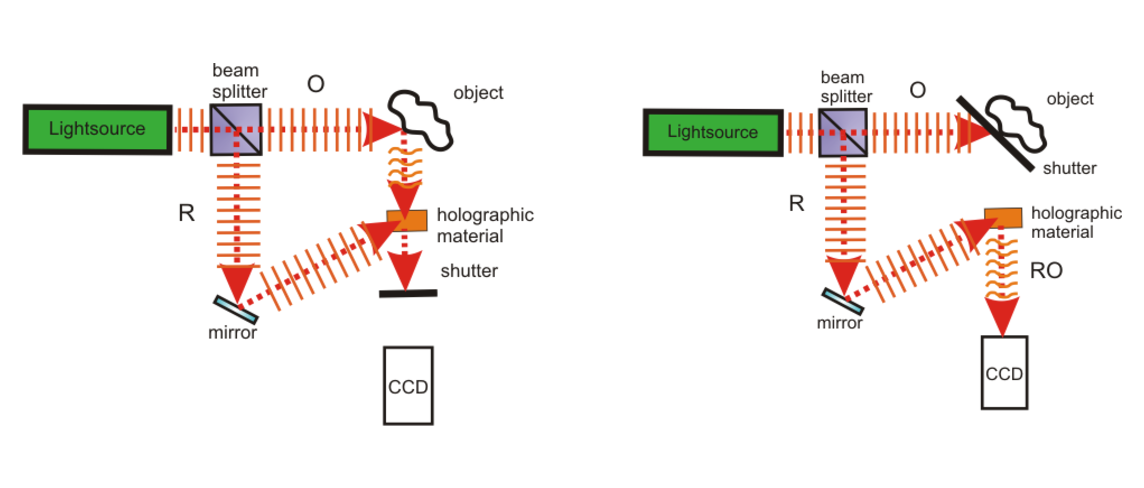
The basic prin­ci­ple of ho­lo­gra­phy is the su­per­po­si­ti­on of two co­he­rent beams crea­ting an in­ter­fe­rence pat­tern, the so cal­led ho­lo­gram. If one of the beams has been re­flec­ted by an ob­ject, it is cal­led ob­ject beam and con­tains the en­t­i­re to­po­gra­phic in­for­ma­ti­on of the ob­ject. If this beam is su­per­im­po­sed with a plane re­fe­rence beam onto a ho­lo­gra­phic ma­te­ri­al, a ho­lo­gram is crea­ted in which the in­for­ma­ti­on of the ob­ject can be stored (Fi­gu­re 1a). This in­for­ma­ti­on can be re­trie­ved by again shi­ning the re­fe­rence beam onto the ho­lo­gra­phic ma­te­ri­al so that the ob­ject beam is recrea­ted (Fi­gu­re 1b).

© RUB/ETIT/PTT

Fi­gu­re 1a: Wri­ting a ho­lo­gram, O = ob­ject beam, R= re­fe­rence beam.

Fi­gu­re 1b: Re­trie­ving a ho­lo­gram, RO = re­con­struc­ted ob­ject beam, R = re­fe­rence beam

Pho­to­re­frac­tive Ho­lo­gra­phy

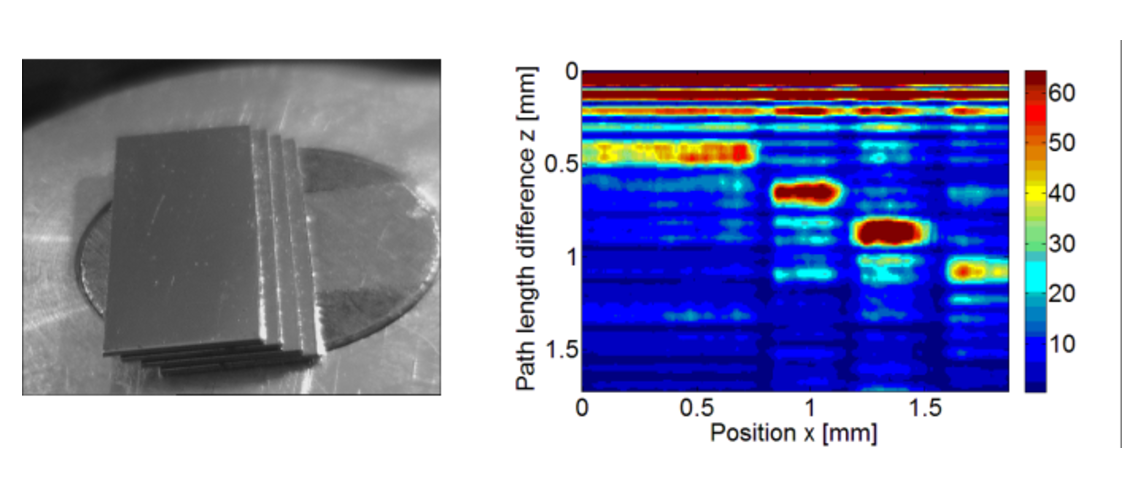
Using a pho­to­re­frac­tive ma­te­ri­al as ho­lo­gra­phic ma­te­ri­al is cal­led pho­to­re­frac­tive ho­lo­gra­phy. When a broad­band light sour­ce is de­ploy­ed, the en­t­i­re depth in­for­ma­ti­on can be saved for in­stan­ce in a pho­to­re­frac­tive crys­tal with only one shot [1,2]. An eva­lua­ti­on over all spec­tral com­po­n­ents, which is si­mi­lar to op­ti­cal co­he­rence to­mo­gra­phy, enables the re­co­very of the depth in­for­ma­ti­on. The la­te­ral re­so­lu­ti­on is de­fined by the size of the pi­xels of the ca­me­ra and op­tics used op­tio­nal­ly and lies in the µm range. It is howe­ver re­stric­ted to the dif­frac­tion limit. The axial re­so­lu­ti­on is de­pen­dant on the amount of the spec­tral com­po­n­ents of the light sour­ce and is cur­rent­ly about 100 µm. The pho­to­gra­phic image and the me­a­su­red depth in­for­ma­ti­on of a samp­le are given in fi­gu­re 2a and 2b.

© RUB/ETIT/PTT

Fi­gu­re 2a: Photo of a samp­le

Fi­gu­re 2b: Depth in­for­ma­ti­on of the samp­le

Di­gi­tal Ho­lo­gra­phy

In con­trast to pho­to­re­frac­tive ho­lo­gra­phy, there is no ho­lo­gra­phic ma­te­ri­al re­cor­ding the ho­lo­gram. A CCD- or CMOS Ca­me­ra is in­s­tead used to save the in­ter­fe­rence pat­tern. A prin­ci­ple di­gi­tal ho­lo­gra­phy set-up is shown in Fi­gu­re 3a.

© RUB/ETIT/PTT

Fi­gu­re 3a: Prin­ci­ple set-up of di­gi­tal ho­lo­gra­phy , O = ob­ject beam, R= re­fe­rence beam

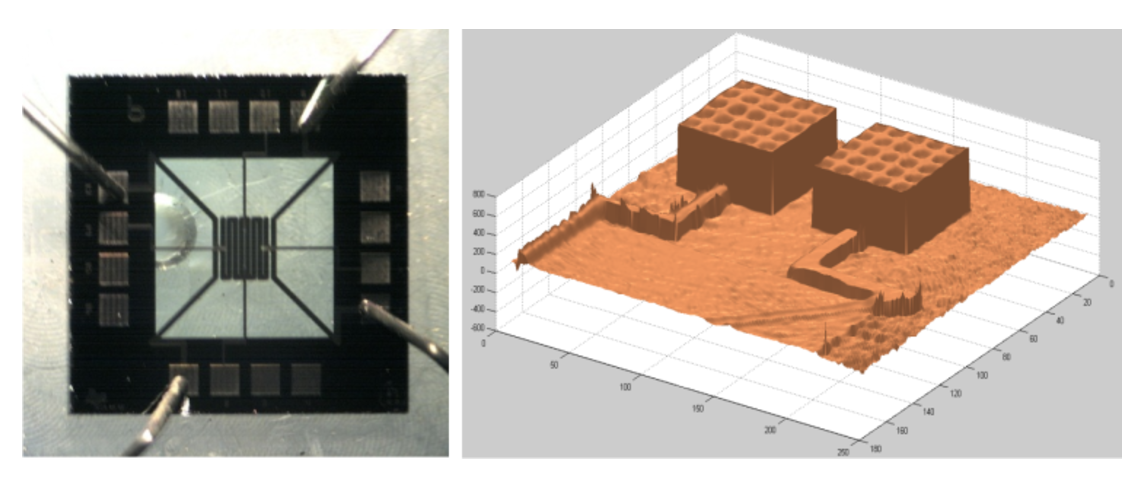
Am­pli­tu­de and phase of the ob­ject beam are then nu­me­ri­cal­ly re­con­struc­ted in order to gain the ob­ject in­for­ma­ti­on. The la­te­ral re­so­lu­ti­on is de­fined by the size of the pi­xels of the ca­me­ra and op­tics used op­tio­nal­ly and lies in the µm range. The axial re­so­lu­ti­on is in the range of 10 nm. A re­con­struc­tion of bond pads of a MOEMS struc­tu­re (Fi­gu­re 3b) is given in Fi­gu­re 3c.

© RUB/ETIT/PTT

Fi­gu­re 3b: bond pads

Fi­gu­re 3c: re­con­struc­ted bond pads

Di­gi­tal ho­lo­gra­phic Microsco­py

When ex­pan­ding the di­gi­tal ho­lo­gra­phic set-up by a microsco­pe ob­jec­tive, both la­te­ral and axial re­so­lu­ti­on can be in­crea­sed. Fur­ther­mo­re, nu­me­ri­cal am­pli­tu­de and phase fil­ters can be ap­p­lied to the re­cor­ded data, so that fil­ter ef­fects like dark field microsco­py can be car­ried out wi­thout ad­ding fur­ther me­cha­ni­cal com­po­n­ents to the set-up. A ty­pi­cal di­gi­tal ho­lo­gra­phic microsco­py set-up is shown in Fi­gu­re 4.

Fi­gu­re 4: Di­gi­tal ho­lo­gra­phic microsco­py, O = ob­ject beam, R = re­fe­rence beam, MO = microsco­pe ob­jec­tiv

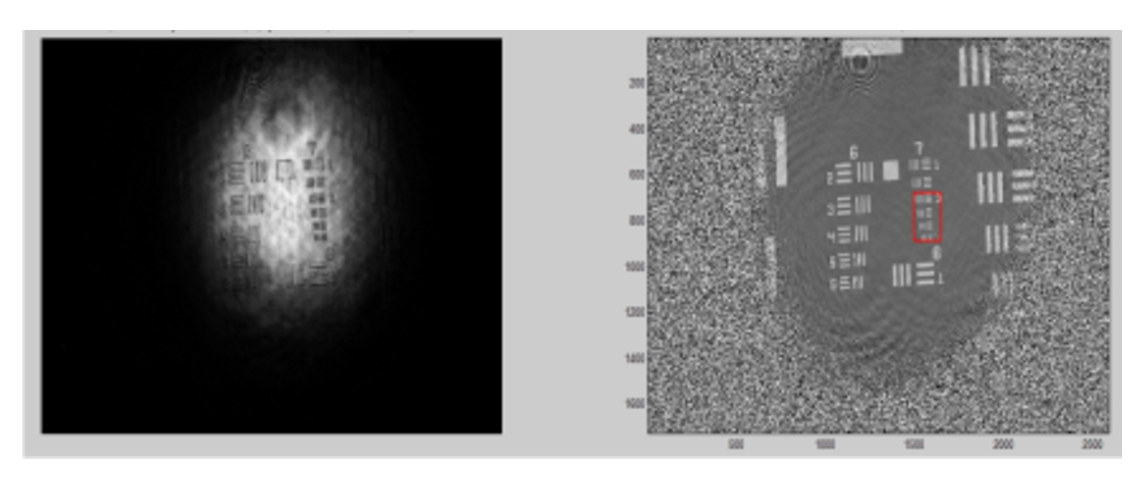
The am­pli­tu­de and the phase re­con­struc­tion of a USAF test chart can be seen in Fi­gu­re 5a and 5b re­spec­tive­ly.

© RUB/ETIT/PTT

Fi­gu­re 5a: am­pli­tu­de re­con­struc­tion

Fi­gu­re 5b: phase re­con­struc­tion

As the to­po­gra­phic struc­tu­re of an ob­ject is en­coded in the phase in­for­ma­ti­on, it can be nu­me­ri­cal­ly un­wrap­ped. A three di­men­sio­nal re­pre­sen­ta­ti­on of the USAF test chart is shown in Fi­gu­re 6. Dif­fe­ren­ces in height bet­ween 10 and 400 nm can be re­con­struc­ted. La­te­r­al­ly, the re­so­lu­ti­on is re­stric­ted to the dif­frac­tion limit and is smal­ler than 2 µm.

© RUB/ETIT/PTT

Fig 6: 3-di­men­sio­nal reconstruction of the testchart

Du­al-wa­ve­length scan­ning

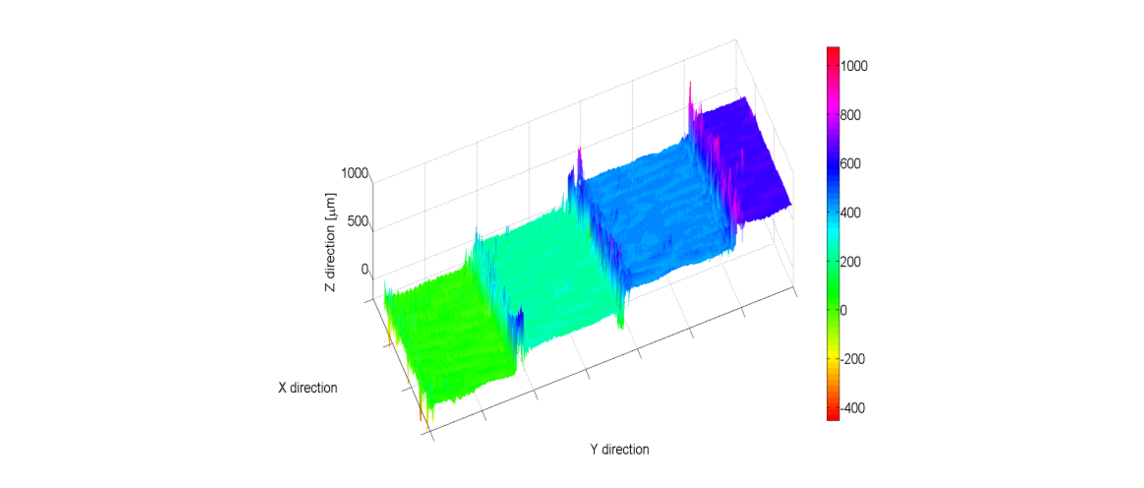
Sam­ples cha­rac­te­ri­zed by big­ger dif­fe­ren­ces in height, can be me­a­su­red with the help of dual­wa­ve­length scan­ning. This tech­ni­que uses two ho­lo­grams at two dif­fe­rent wa­ve­lengths. The phase dif­fe­rence of these two ho­lo­grams is cal­cu­la­ted re­pre­sen­ting a hig­her syn­the­tic wa­ve­length with which hig­her struc­tu­res can be re­con­struc­ted. Fi­gu­re 7 shows the re­con­struc­tion of 200 µm high metal steps, which was cal­cu­la­ted with two ho­lo­grams at wa­ve­lengths of 833 and 834 nm.

© RUB/ETIT/PTT

Figure 7: 3-dimensional reconstruction of step sample, recorded by dual wavelength scanning

Over­view of Re­so­lu­ti­on of ho­lo­gra­phic Tech­ni­ques

Tech­ni­queIma­ging areaLa­te­ralre­so­lu­ti­onAxial re­so­lu­ti­on(mi­ni­mun)Axial re­so­lu­ti­on(Ma­xi­mum)
Pho­to­re­frac­tive Ho­lo­gra­phyup to 25 mm²de­pen­dant on size of pixel200 µm1,5 mm
Di­gi­tal Ho­lo­gra­phyup to 25 mm²de­pen­dant on size of pixel30 nm420 nm
Di­gi­tal ho­lo­gra­phic Microsco­py10 mm² to 0,1 mm²up to 1µm10 nm420 nm
Du­al-wa­ve­length scan­ningup to 25 mm²up to 1 µm450 nm to 3,5 µm9 µm to 70 µm

Re­fe­rence:

  • [1] Koukou­ra­kis, N., Kass­eck, C., Rytz, D., Ger­hardt, N. C., & Hof­mann, M. R. (2009). Sin­gle-shot ho­lo­gra­phy for depth re­sol­ved three di­men­sio­nal ima­ging. Op­tics Ex­press, 17(23), 21015-21029.
  • [2] D. Gros­se, N. Koukou­ra­kis, N. C. Ger­hardt, T. Schlauch, J. C. Bal­zer, A. Klehr, G. Er­bert, G. Tränk­le, and M. R. Hof­mann, “Sin­gle-shot ho­lo­gra­phy with col­li­ding pulse mo­de-lo­cked la­sers as light sour­ce,” in Pro­cee­dings of the In­ter­na­tio­nal Quan­tum Elec­tro­nics Con­fe­rence and Con­fe­rence on La­sers and Elec­tro-Op­tics Pa­ci­fic Rim 2011, (Op­ti­cal So­cie­ty of Ame­ri­ca, 2011), paper C835.

Self-re­fe­ren­cing di­gi­tal ho­lo­gra­phic microsco­py

© RUB/ETIT/PTT

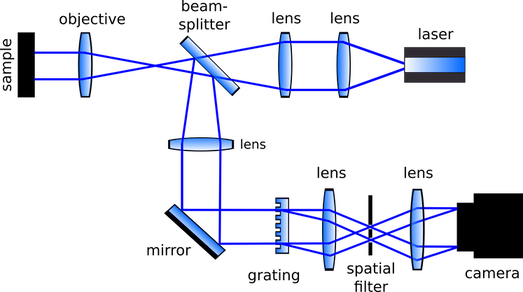
Many ty­pi­cal ho­lo­gra­phic microsco­pic set­ups ge­ne­ra­te a ho­lo­gram by over­lay­ing an ob­ject wave and a re­fe­rence wave, which tra­vel along dif­fe­rent paths be­fo­re they in­ter­fe­re with each other. The very high sen­si­ti­vi­ty of these sys­tems, which is on the one hand re­s­pon­si­ble for the su­pe­ri­or phase re­so­lu­ti­on, makes these sys­tems also very sen­si­ti­ve to dis­tur­ban­ces from the en­vi­ron­ment, e.g. ther­mal chan­ges or me­cha­ni­cal vi­b­ra­ti­ons.

One con­cept to over­co­me these sta­bi­li­ty re­qui­re­ments is the com­mon-path in­ter­fe­ro­me­ter. In­s­tead of se­pa­ra­te ob­ject and re­fe­rence beams, here the re­fe­rence is di­rect­ly crea­ted out of the ob­ject beam. For this pur­po­se, an ob­ject beam is di­vi­ded into mul­ti­ple or­ders. One of the or­ders is spa­ti­al­ly fil­te­red, which crea­tes the re­fe­rence, while the other order re­mains un­fil­te­red. The in­ter­fe­rence of both or­ders crea­tes the ho­lo­gram. Since both ob­ject and re­fe­rence tra­vel along the same op­ti­cal path, ex­ter­nal dis­tur­ban­ces in­flu­ence both beams in the same man­ner. The­re­fo­re, they re­main sta­ble in re­la­ti­on to each other. Fur­ther­mo­re, since both ob­ject and re­fe­rence have their ori­gin in the ob­ject wa­vefront, small va­ria­ti­ons of the samp­le have no si­gni­fi­cant in­flu­ence on the phase sta­bi­li­ty. This con­cept of self-re­fe­ren­cing high­ly de­crea­ses the sta­bi­li­ty re­qui­re­ments of these sys­tems. These sys­tems are not only per­fect­ly sui­ted for on­line mo­ni­to­ring of sam­ples or pro­ces­ses, but also well ca­pa­ble of in­ves­ti­ga­ting bu­ried struc­tu­res [3,4].

Re­fe­rence:

  • [3]: Fin­kel­dey, M., Gö­ring, L., Bren­ner, C., Hof­mann, M., & Ger­hardt, N. C. (2017). Depth-fil­te­ring in com­mon-path di­gi­tal ho­lo­gra­phic microsco­py. Op­tics Ex­press, 25(16), 19398-19407.
  • [4]: Neutsch, K., Schnitz­ler, L., Sun, J., Tra­ne­lis, M. J., Hof­mann, M. R., & Ger­hardt, N. C. (2020, Fe­bru­ary). In-depth par­ti­cle lo­ca­liza­t­i­on with com­mon-path di­gi­tal ho­lo­gra­phic microsco­py. In Prac­tical Ho­lo­gra­phy XXXIV: Dis­plays, Ma­te­ri­als, and Ap­p­li­ca­ti­ons (Vol. 11306, p. 113060A). In­ter­na­tio­nal So­cie­ty for Op­tics and Pho­to­nics.

Di­gi­tal Ho­lo­gra­phic Microsco­py using Lloyd's Mir­ror In­ter­fe­ro­me­ter

© RUB/ETIT/PTT

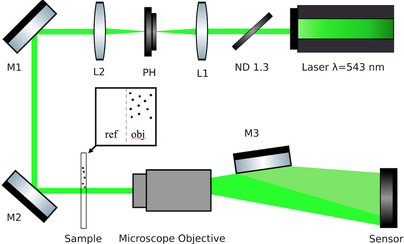
Based on the con­cept of self-re­fe­ren­cing in­ter­fe­ro­me­try, ano­ther setup is the Lloyd's mir­ror in­ter­fe­ro­me­ter. In­s­tead of se­pa­ra­ting the ob­ject beam in order to crea­te a re­fe­rence, like in the com­mon-path in­ter­fe­ro­me­ter, here the beam re­mains un­di­vi­ded. In­s­tead, the samp­le is lo­ca­ted in a man­ner that only one half of the beam is in­flu­en­ced by the struc­tu­res of the samp­le. The other half of the beam re­mains main­ly un­al­te­red and is used as re­fe­rence. In order to over­lay the one half with the other, a mir­ror is used, which "folds" the one part into the other and thus crea­tes the in­ter­fe­rence ho­lo­gram. This ho­lo­gram can be re­con­struc­ted like an or­di­na­ry off-axis ho­lo­gram and con­tains am­pli­tu­de as well as phase in­for­ma­ti­on of the samp­le. The Lloyd's Mir­ror setup re­qui­res only a small num­ber of op­ti­cal com­po­n­ents is very sta­ble and com­pact [5].

© RUB/ETIT/PTT

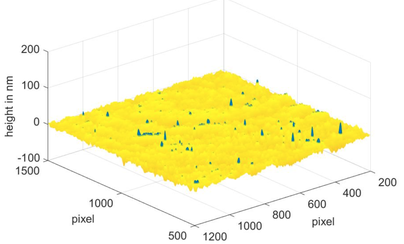
Due to its ima­ging ca­pa­bi­li­ties and high phase sen­si­ti­vi­ty, ho­lo­gra­phic set­ups are very sui­ta­ble for the de­tec­tion of small par­ti­cles. This can be in­te­res­ting for nu­me­rous ap­p­li­ca­ti­ons, e.g. op­ti­cal au­then­ti­ca­ti­on in IT-se­cu­ri­ty (op­ti­cal PUFs), bio-me­di­cal ima­ging, con­ta­mi­na­ti­on de­tec­tion in ma­nu­fac­tu­ring and pollu­ti­on con­trol.

Re­fe­rence:

  • [5]: Neutsch, K., Schnitz­ler, L., Klee­mann, N., Hof­mann, M., & Ger­hardt, N. C. (2019, Oc­to­ber) "Ho­lo­gra­phic ima­ging of par­ti­cles using Lloyd’s mir­ror con­fi­gu­ra­ti­on". Face2­Phase II, Delft, the Nether­lands
  • [siehe auch]: Ch­ha­ni­wal, V., Singh, A. S., Leit­geb, R. A., Ja­vi­di, B., & Anand, A. (2012). Quan­ti­ta­ti­ve pha­se-con­trast ima­ging with com­pact di­gi­tal ho­lo­gra­phic microsco­pe em­ploy­ing Lloyd’s mir­ror. Op­tics Let­ters, 37(24), 5127-5129.

Trans­mis­si­on di­gi­tal ho­lo­gra­phic ima­ging with mo­di­fied Mach-Zehn­der In­ter­fe­ro­me­ter

For a wide va­rie­ty of ap­p­li­ca­ti­ons, the in­ves­ti­ga­ti­on of sam­ples in the trans­mis­si­on geo­me­try is pre­fer­red. With uni­ver­sa­li­ty and fle­xi­bi­li­ty in mind, a Mach-Zehn­der in­ter­fe­ro­me­ter re­mains a com­mon­ly used op­ti­on in such cases. The lat­ter is a clas­si­cal two-beam in­ter­fe­ro­me­tric sys­tem and com­mon­ly suf­fers from its high sus­cep­ti­bi­li­ty to the am­bi­ent noise com­pa­red to the com­mon-path so­lu­ti­ons. In order to be­ne­fit from the Mach-Zehn­der geo­me­try and at the same time to ad­dress the sta­bi­li­ty issue, the basic con­fi­gu­ra­ti­on can be mo­di­fied: each of the cor­ner mir­rors can be re­pla­ced with a Mi­chel­son-li­ke add-on out of a beam­split­ter and a mir­ror [6]. Such a so­lu­ti­on is sche­ma­ti­cal­ly shown in Fig. 11 (ad­ap­ted from [6]). Here­by the sys­tem ac­qui­res a sta­ble per­for­mance [7] with phase ac­cu­ra­cy of just 0.​69° [6] whe­re­as the in­stru­ment enables in­ves­ti­ga­ti­on of dif­fe­rent sam­ples in terms of their op­ti­cal thick­ness. The ima­ging op­tics in the samp­le area can be ea­si­ly chan­ged and com­pen­sa­ted. Ex­am­ples of ap­p­li­ca­ti­ons for a such a sys­tem in­clu­de high-re­so­lu­ti­on ima­ging of spa­ti­al­ly-con­fined struc­tu­res [6], in-depth al­lo­ca­ti­on of the micro­me­ter-sca­le par­ti­cles [8], on­line mo­ni­to­ring of the re­frac­tive index evo­lu­ti­on du­ring the pho­to-che­mi­cal re­ac­tions [9], car­ri­er con­cen­tra­ti­on map­ping in se­mi­con­duc­tor sam­ples [10], and many others.

© RUB/ETIT/PTT

Fig. 11. Sche­ma­tic re­pre­sen­ta­ti­on of the mo­di­fied Mach-Zehn­der In­ter­fe­ro­me­ter with a uni­ver­sal de­lay-li­ne: 1 – light sour­ce for ima­ging/pro­bing, 2 – sin­gle-mo­de op­ti­cal fiber, 3 – colli­ma­tor, 4,6,8 and 10 – beam­split­ters, 5 – op­tio­nal neu­tral den­si­ty fil­ter, 7 and 9 – mir­rors, 11 –ca­me­ra.

Re­fe­rence:

  • [6] V.R. Be­sa­ga, A.V. Saetch­ni­kov, N.C. Ger­hardt, A. Os­ten­dorf, and M.R. Hof­mann, "Di­gi­tal ho­lo­gra­phic microsco­py for sub-μm scale high as­pect ratio struc­tu­res in trans­pa­rent ma­te­ri­als," Op­tics and La­sers in En­gi­nee­ring 121, 441-447 (2019); doi: 10.​1016/​j.​optlaseng.​2019.​05.​007.​
  • [7] V.R. Be­sa­ga, A.V. Saetch­ni­kov, N.C. Ger­hardt, A. Os­ten­dorf, and M.R. Hof­mann, "Per­for­mance eva­lua­ti­on of di­gi­tal ho­lo­gra­phic microsco­py for rapid in­spec­tion," OSA Tech­ni­cal Di­gest, Di­gi­tal Ho­lo­gra­phy and Three-Di­men­sio­nal Ima­ging, Th3A. 10 (2019); doi: 10.​1364/​DH.​2019.​Th3A.​10.​
  • [8] V.R. Be­sa­ga, A.V. Saetch­ni­kov, N.C. Ger­hardt, A. Os­ten­dorf, and M.R. Hof­mann, "Near re­al-ti­me di­gi­tal ho­lo­gra­phic ima­ging on con­ven­tio­nal cen­tral pro­ces­sing unit," Proc. 3SPIE 11056, 110562I (2019); doi: 10.​1117/​12.​2526112.​
  • [9] V.R. Be­sa­ga, A.V. Saetch­ni­kov, N.C. Ger­hardt, A. Os­ten­dorf, and M.R. Hof­mann, "Mo­ni­to­ring of pho­to­che­mi­cal­ly in­du­ced chan­ges in pha­se-mo­du­la­ting sam­ples with di­gi­tal ho­lo­gra­phic microsco­py," Ap­p­lied Op­tics 58 (34), G41-G47 (2019); doi: 10.​1364/​AO.​58.​000G41.​
  • [10] V.R. Be­sa­ga, N.C. Ger­hardt, and M.R. Hof­mann, "Di­gi­tal ho­lo­gra­phy for eva­lua­ti­on of the re­frac­tive index di­stri­bu­ti­on ex­ter­nal­ly in­du­ced in se­mi­con­duc­tors," Proc. SPIE 11306, 1130608 (2020); doi: 10.​1117/​12.​2544160.​

Col­le­agues:

  • Nils Ger­hardt
  • Na­vi­na Klee­mann
  • Leon Zens
Postal address

Ruhr-Universität Bochum
Fakultät für Elektrotechnik und Informationstechnik
Photonics & Terahertz Technology
Building ID, Postbox 16

Universitätsstraße 150
D-44801 Bochum

Contact
ID 04/327
(+49)(0)234 / 32 - 23051
ptt+office(at)rub.de
Travel information
Faculty campus map
RUB travel instructions
Fakultät für Elektrotechnik und Informationstechnik
© 2026
Social Media
  • Legal notice
  • Privacy notice
  • Copyright
©Copyright information
for this page