
Electrical engineering
and information technology (B.Sc.)
Bachelor's degree programme
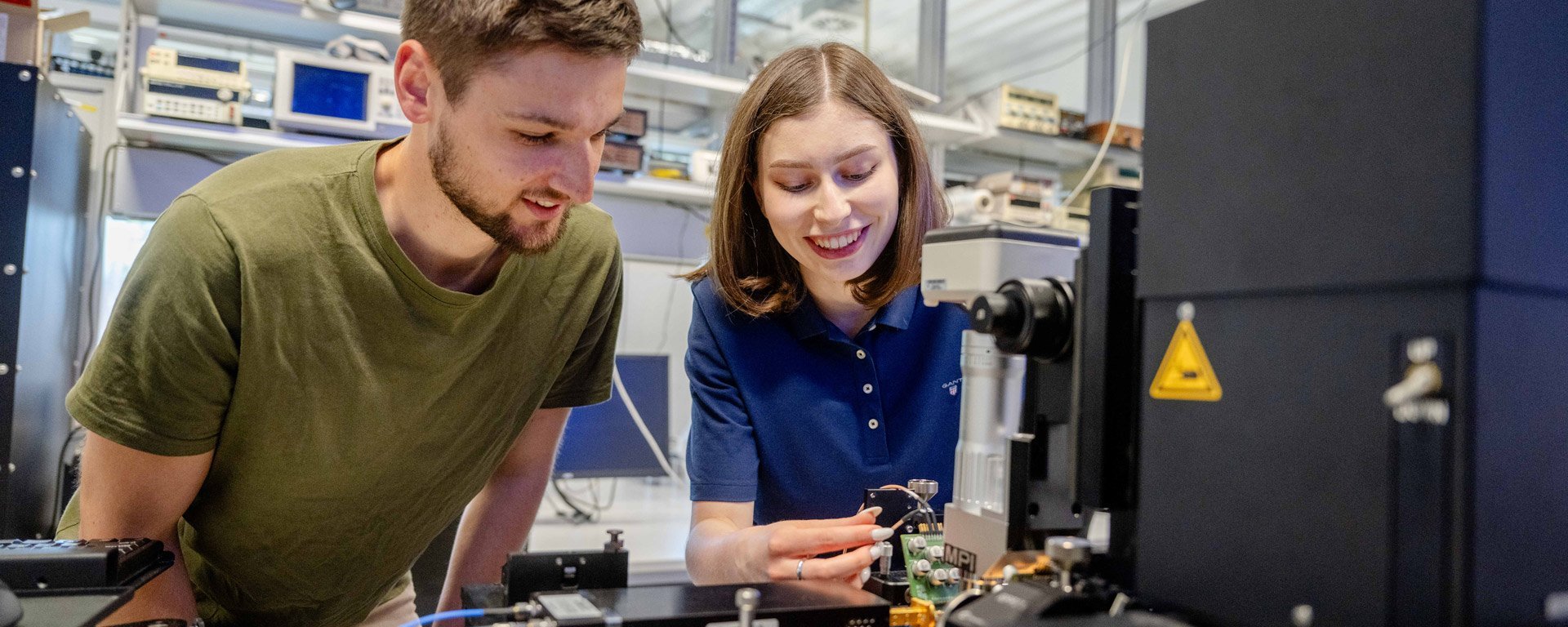
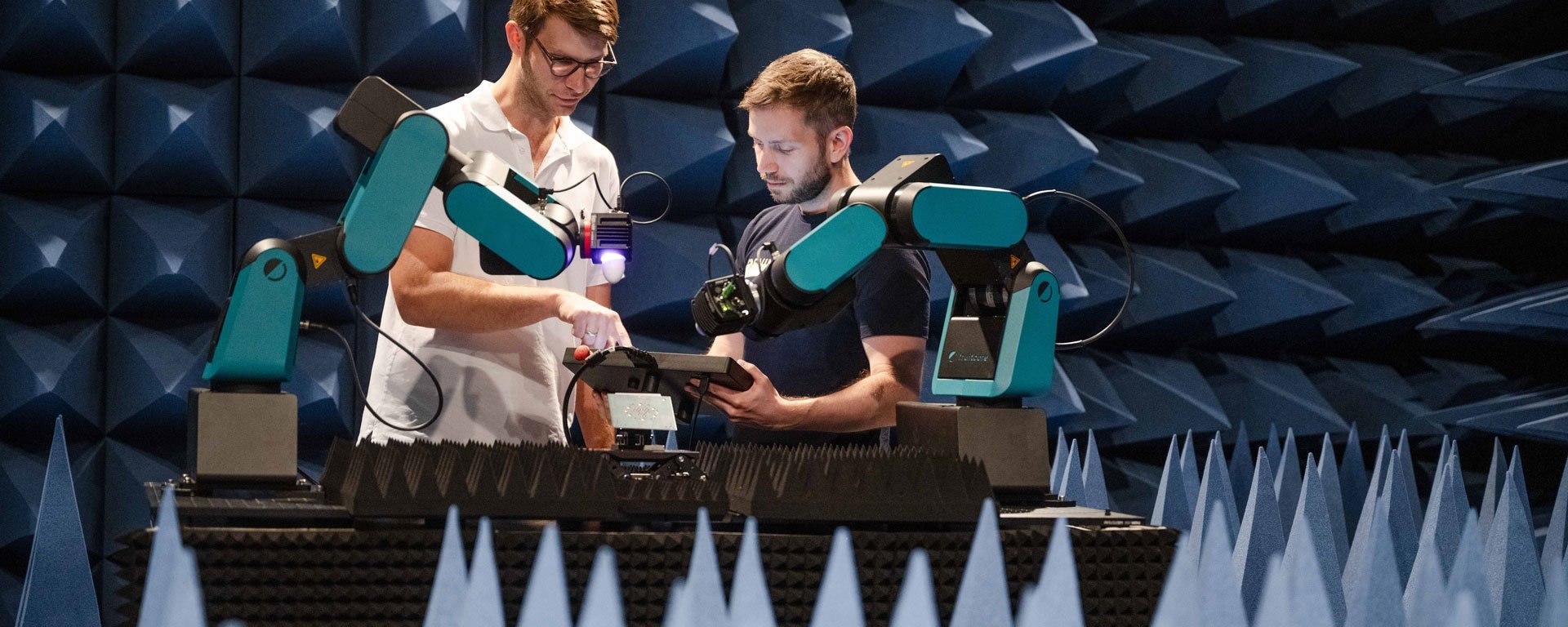
As a prospective engineer in electrical engineering and information technology, you will revolutionise the world of technology. You will develop innovative systems and components that are more efficient and environmentally friendly, conduct research into socially relevant topics in the field of communication and thus contribute to a better future for us all.
Questions?
Do you have questions about study content, requirements, or enrollment?
Our Student Advisors are happy to support you:
studienberatung(at)ei.rub.de
At a glance
- Standard period of study:
6 semesters - Degree: Bachelor of Science
- Languages of instruction:
German and English - Start: Winter semester
- Admission: admission-free
Notes for international applicants:
Also possible as a dual study program or a research-integrated study program
In the dual study you already work in a company from the 1st semester, earn money and combine your bachelor's degree with industry experience.
In the research-integrated study program, you earn money alongside your studies by working as a student research assistant at one of the participating chairs.
Admission requirements
You should have a basic understanding of maths and enjoy logical thinking. But don't worry - you will learn all the important basics during your bachelor's degree programme, you can take part in preliminary courses before starting your studies and learn together with other students in our tutorials during your studies. Our student counselling service is also on hand to help you with any questions or problems you may have.
As a rule, a general higher education entrance qualification (Abitur) is required. However, it is possible to qualify for the degree programme by other means.
Career prospects
As an engineer in electrical engineering and information technology, many doors are open to you, as your knowledge is urgently needed in many future-oriented areas. Depending on whether you want to pursue an academic career or go into industry: We support you in your career planning.
What will I learn during my studies?
In addition to mathematical and scientific fundamentals, you will learn the most important skills in areas such as signal transmission, communication, energy technology, electronics and sensor technology. After your Bachelor's degree, you can successfully start your career as an engineer or deepen your knowledge in the Master's degree programme.