Faculty News
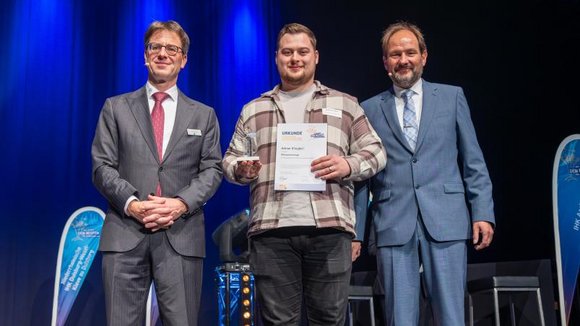
Two RUB apprentices among the best in NRW
Adrian Klingbeil and Felix Gerle were honoured on 8 November.
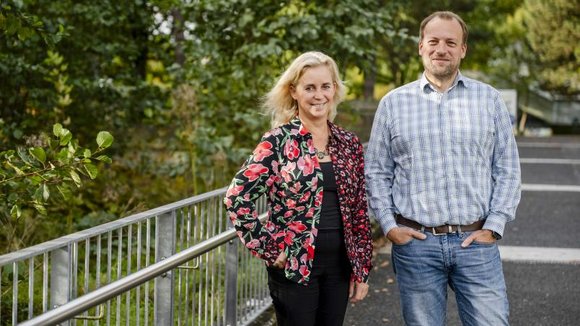
Die Trümpfe der kurzen Wellenlängen
Die neuesten Entwicklungen der Halbleitertechnologie erlauben die praktische Nutzung von Terahertzwellen. Ein großes Netzwerk geht den Wellenlängenbereich von allen Seiten an.

Infoveranstaltung: Wege ins Ausland
Wie kann ich einen Auslandsaufenthalt sinnvoll in mein Studium integrieren? Welche Fördermöglichkeiten gibt es? Welche Erfahrungen haben andere Studierende gemacht?
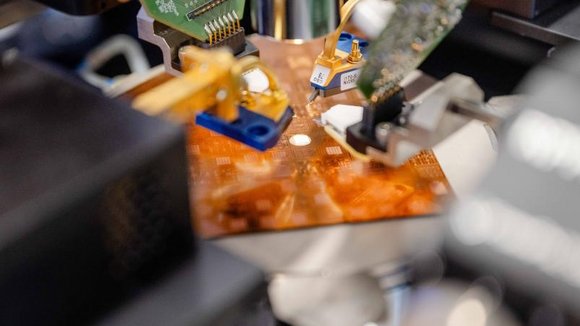
New film shows how the terahertz gap is to be closed
The latest developments in semiconductor technology allow the practical use of terahertz waves. A film explains how this works.
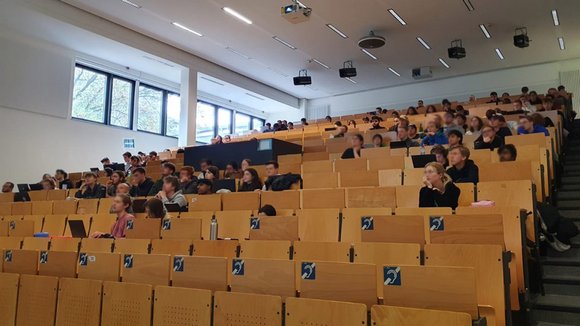
Successful IEEE Distinguished Instructors Workshop
On Monday, 28 October 2024, around 100 students from our faculty took part in this year's IEEE Distinguished Instructors Workshop at the HID. The global online event aims to inspire future engineers and introduce them to innovative technologies and systems.
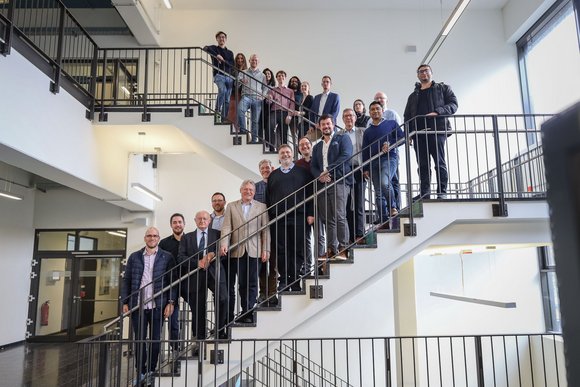
Fourth meeting of the IEEE Germany Section AdCom at the ETIT faculty
The Faculty of Electrical Engineering at Ruhr-Universität Bochum hosted the fourth meeting of the IEEE Germany Section Administrative Committee (AdCom) on 28 and 29 October 2024. The event was initiated by Dr Christoph Baer, Vice-Chair of the IEEE Germany Section, and Prof Jan Haase, Chair of the Section from the Noordakademie in Hamburg.

Prof Brinkmann celebrates 25 years of service
The Faculty of Electrical Engineering and Information Technology would like to congratulate Prof Ralf Peter on his 25th anniversary of service.

Obituary Prof. Dr. Florian Haberey
The University has lost a highly esteemed, renowned, passionate scientist and scientist and university lecturer, Prof. Florian Haberey.

Take part and win! CHE student survey
Support future students in their choice of study programme and help Ruhr-Universität Bochum to develop further!

Vortrag: Abstand halten! Kooperative Regelungen in automatischen Fahrzeugen
Haben Sie sich schon einmal überlegt, wie Abstandsregler (ACC - adaptive cruise control) funktionieren, die man heute in vielen Pkws findet? Und wie Fahrerassistenzsysteme auch in einer langen Fahrzeugkolonne Kollisionen verhindern können? Dabei spielen sogenannte kooperative Regelungen eine Rolle, die auf einer mathematischen Analyse der Fahrzeugkolonne basieren.